
OpenAI Rolls Out GPT-5.4 in ChatGPT
OpenAI rolled out GPT-5.4 in ChatGPT on March 5, 2026, bringing its newest reasoning system to the company’s consumer and workplace AI platform as it pushes further into professional productivity tools. The release introduces GPT-5.4 Thinking in ChatGPT and expands the same model family across the API and Codex, giving the launch significance well beyond the chatbot itself.
The company described GPT-5.4 as a model built for professional work, combining recent advances in reasoning, coding and agentic workflows into a single system. In ChatGPT, the update is aimed at tasks such as research, spreadsheet work, document handling, presentations and software development. OpenAI said GPT-5.4 Thinking can show users an upfront plan before completing a response, allowing them to steer the model while it is still working rather than waiting for a final answer.
The rollout also changes how advanced reasoning is surfaced inside ChatGPT. OpenAI said GPT-5.4 Thinking is being added to paid ChatGPT tiers and is replacing GPT-5.2 Thinking as the main reasoning option, while GPT-5.4 Pro is reserved for higher-end subscriptions and enterprise-focused plans. The company added that GPT-5.2 Thinking will remain in the legacy model section until June 5, 2026, giving users a transition period as the newer system becomes the default choice for more demanding work.
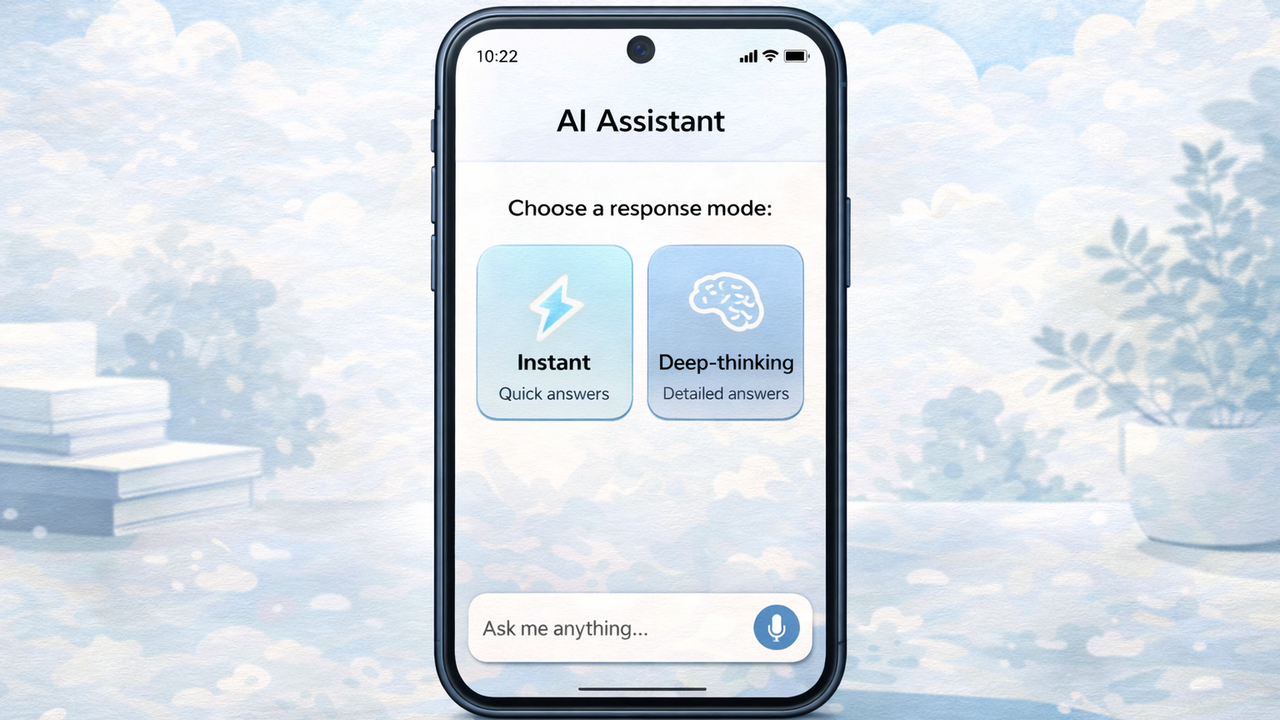
According to the company’s support materials, ChatGPT’s Auto setting can switch between faster and deeper reasoning modes depending on the task. That reflects a broader strategy to simplify the product lineup while still letting users access stronger models when needed. The release comes after a series of recent model updates and suggests OpenAI is trying to make its highest-performing systems easier to use inside one interface rather than forcing customers to choose from a crowded list of separate tools.
Beyond ChatGPT, the release is notable because OpenAI said GPT-5.4 is its first mainline reasoning model to absorb the frontier coding capabilities previously associated with GPT-5.3-Codex. In the API and Codex, the company also described GPT-5.4 as its first general-purpose model with native computer-use capabilities, allowing agents to interact with websites, apps and software environments directly. OpenAI said the model supports up to roughly one million tokens of context, a level designed for long-running, multi-step workflows.
OpenAI used the launch to argue that GPT-5.4 is not only more capable but also more reliable. The company said that on a set of prompts where users had flagged factual problems, GPT-5.4’s individual claims were 33 percent less likely to be false than those produced by GPT-5.2, while complete answers were 18 percent less likely to contain errors. It also reported gains on benchmarks tied to office tasks, tool use, visual understanding and academic reasoning.
The broader significance of the launch lies in how clearly it is aimed at knowledge work and AI agents rather than casual chat. Outside coverage of the release emphasized GPT-5.4’s stronger support for autonomous, multi-step tasks and computer interaction, while OpenAI’s own messaging focused on workplace usefulness. For ChatGPT users, the immediate result is a more capable reasoning model; for OpenAI, the release marks another step toward turning ChatGPT into a platform for completing digital work from start to finish.























 Harry Negron
Harry Negron is the CEO of Jivaro, a writer, and an entrepreneur with a background in science, technology, and digital publishing. He holds a B.S. in Microbiology and Mathematics and a Ph.D. in Genetics, with a specialization in biomedical sciences. His work spans finance, science, health, gaming, and technology, and his projects include free apps, automation tools, and large-scale search utilities. Originally from Puerto Rico and based in Japan since 2018, he brings an international perspective to Jivaro’s content, research, and tools.