Best Proxy Providers: A Comprehensive Real-World Comparison
Proxy providers are easy to compare badly. One service may advertise “$1/GB,” another may sell fixed ISP proxies by the IP, another may focus on 5G mobile proxies, and another may bundle proxy access into a full data-collection platform. Those are not the same product.
The practical way to compare proxy providers is by proxy type, pricing model, session control, targeting, and workflow fit. For example, IPRoyal, DataImpulse, PacketStream, and Webshare are natural places to look when price matters. Bright Data, SOAX, and Shifter make more sense when scale, data tooling, targeting, or compliance matter more than the cheapest possible gigabyte.

How to compare proxy providers without getting misled
A low sticker price does not always mean a low real cost. Residential proxy plans are often priced by bandwidth. Datacenter proxies may be priced by IP. Static ISP proxies may be priced monthly per proxy. Mobile proxies may be priced by traffic, day, port, or dedicated device access.
| Proxy buying question | Why it matters |
|---|---|
| Is it priced by GB, IP, port, day, or month? | A cheap per-GB plan and a fixed monthly proxy solve different problems. |
| Is the proxy rotating or static? | Rotating works for broad crawling; static works better for long sessions. |
| Is it residential, ISP, datacenter, or mobile? | Each type has different cost, speed, and block-resistance tradeoffs. |
| Does traffic expire? | Some low-cost plans are less attractive if unused bandwidth expires quickly. |
| Does it support HTTP, HTTPS, and SOCKS5? | Browser, scraping, app-routing, and automation workflows may need different protocols. |
| Does it work cleanly with browser isolation? | Proxy work often fails because the browser fingerprint and session data are messy, not because the proxy itself is bad. |
For browser-heavy work, a proxy is often most useful inside a profile-based browser workflow. Jivaro’s Instanciar is a natural fit when you want separate browser sessions with proxy support, while Proxifier is better when an app has no native proxy settings but still needs to be routed through HTTP or SOCKS proxies.
Quick comparison table
| Provider | Best fit | Public pricing snapshot | Main tradeoff |
|---|---|---|---|
| Bright Data | Enterprise proxy and data collection workflows | Residential pricing page shows starting from $5.88/GB | Powerful, but overkill for simple budget proxy use. |
| DataImpulse | Cheap pay-as-you-go residential traffic | Public homepage says $1 per GB | Good pricing, but less of an enterprise tooling stack. |
| IPRoyal | Balanced budget residential, ISP, datacenter, and mobile proxies | Homepage lists residential from $1.75/GB and ISP from $2/proxy | Strong generalist, not a full managed scraping platform. |
| LumiProxy | Low-cost residential and static residential proxy buyers | Residential page shows pricing starting around $0.8/GB; static page shows a $6/IP plan | Pricing and promo pages can vary, so checkout verification matters. |
| MarsProxies | Sneaker, ISP, datacenter, mobile, and residential proxy users | Residential from $3.49/GB, datacenter from $0.89/proxy, ISP from $1.35/proxy | More specialized than some broad residential-only providers. |
| MyPrivateProxy | Private and shared datacenter proxies | Private proxies from $1.13/month and shared proxies from $0.62/month | Mostly datacenter-focused. |
| Nsocks | SOCKS5 and residential proxy workflows | Public page highlights 80M+ residential IPs, but pricing is not clearly exposed in public snippets | Dashboard pricing should be checked before buying. |
| PacketStream | Simple low-cost residential bandwidth | Residential proxies at $1.00/GB | Simple pricing, but fewer advanced controls. |
| PrivateProxy | Static residential and datacenter proxy buyers | Homepage says private proxies start as low as $5 | Smaller ecosystem than the large proxy platforms. |
| Proxy Blocks | Dedicated mobile proxies | Pricing appears more sales-led; public homepage focuses on dedicated mobile proxy features | Specialized mobile-proxy focus. |
| Proxy-Cheap | Low-cost datacenter and rotating residential IPv6 | Datacenter IPv4 from $1.49/month and rotating residential IPv6 from $4.99/GB | Cheap, but not the cleanest fit for sensitive targets. |
| Proxy-Seller | Exact proxy quantities, residential, ISP, IPv4, IPv6, and mobile | Residential page advertises from $0.7/GB | Catalog can be confusing for beginners. |
| Proxy.cc | Large residential pool and trial-first testing | Public pages show 90M+ IPs and mention 500MB trial traffic; visible pricing fields can show placeholders | Final pricing should be verified in account/checkout. |
| Proxying | Residential proxy traffic with no expiry | Plans start at $5/GB and go as low as $2/GB in bulk | Smaller brand footprint than the largest providers. |
| ProxyScrape | Cheap datacenter proxies and residential access | Shared datacenter from $0.02/proxy and residential from about $1.15/GB | Strong value, but more utility-focused than enterprise. |
| Rapid Proxy | Residential and static residential proxy workflows | Public homepage lists 90M+ real-user IPs, free trials, and never-expiring traffic; price is less visible | Public pricing is less clear from the homepage. |
| Raxy Proxy | Pay-as-you-go residential, mobile, premium residential, and datacenter traffic | Residential from $1.69/GB, mobile from $3.37/GB, premium residential from $8.45/GB, datacenter from $0.69/GB | Verify final limits before scaling. |
| Shifter | Large residential pool, ISP proxies, scraping APIs, and SERP APIs | Homepage says from $1.00/GB and 205M+ residential IPs | More platform-like than barebones budget proxy sellers. |
| SOAX | Bundled residential, mobile, ISP, datacenter, and Web Data API access | Starter at $3.60/GB with 25GB included | Higher entry than cheap PAYG providers. |
| Thordata | Low-cost residential, mobile, and datacenter proxy plans | Residential from $2.00 for 1GB and lower per-GB prices at volume | Evaluate support and workflow fit before scaling. |
| Webshare | Cheap proxy servers, static residential, rotating residential, and free testing | 10 free proxies, proxy servers from $0.05/IP, residential from $1.40/GB, static residential from $0.23/IP | Great budget dashboard, less enterprise tooling. |
Pricing changes often, especially promotional pricing. Treat the table as a public snapshot and verify the final checkout page before purchasing.
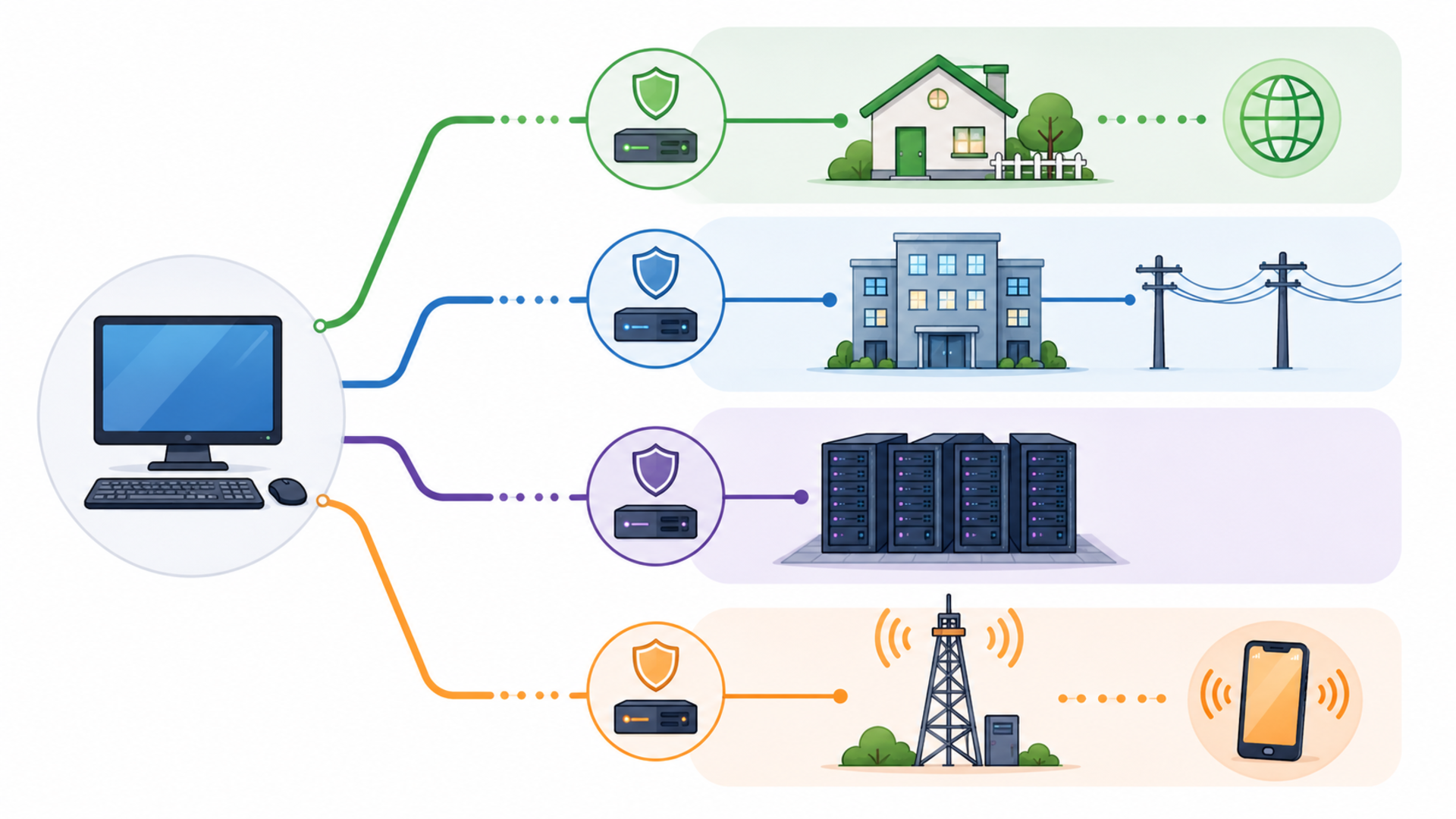
Which proxy type should you buy?
Most proxy mistakes happen before checkout. The buyer picks a provider before deciding what kind of proxy the workflow actually needs.
| Proxy type | Best for | Usually avoid when |
|---|---|---|
| Datacenter proxies | Cheap scraping, SEO checks, fast automation, low-risk targets | The target aggressively blocks hosting-provider IP ranges. |
| Residential proxies | Price monitoring, ad verification, geo-testing, public data collection | You need one IP to stay stable for a long login session. |
| ISP / static residential proxies | Account dashboards, long sessions, fewer IP changes, region-stable workflows | You need massive rotating traffic at the lowest possible cost. |
| Mobile proxies | Mobile app testing, social platforms, mobile-only content, carrier-specific checks | You only need basic browsing or cheap scraping. |
| SOCKS5 proxies | App-level routing, automation tools, non-browser traffic | You expect encryption by default; SOCKS5 is routing, not automatically privacy. |
| Proxy browser sessions | Multi-account workflows, regional testing, separate identities, remote work setups | You only need device-wide protection on public Wi-Fi. |
If your workflow lives in a browser, the proxy is only half the setup. Cookies, local storage, extensions, time zone, WebRTC, and browser fingerprinting can still create inconsistencies. Jivaro’s browser fingerprinting guide and proxy leak testing guide are useful companion reads for that reason.
Provider-by-provider breakdown
Bright Data
Bright Data is the enterprise option in this list. It is not the provider to pick if the only goal is buying the cheapest gigabyte of residential traffic. Its value is in tooling: web unlockers, APIs, datasets, serious compliance workflows, and procurement-friendly infrastructure.
Best for: enterprise scraping, data pipelines, serious public web data collection, and compliance-sensitive teams.
Less ideal for: hobby users, low-budget testing, or anyone who only needs a small number of simple proxies.
DataImpulse
DataImpulse is one of the clearest low-cost residential proxy options in this comparison. It is especially attractive for small scraping jobs, price checks, geo-testing, and experiments where paying enterprise rates would not make sense.
Best for: affordable residential traffic, small-to-medium scraping, and pay-as-you-go buyers.
Less ideal for: teams that need advanced managed scraping tools or a large enterprise support layer.
IPRoyal
IPRoyal is one of the easiest general-purpose proxy providers to understand. It covers residential, ISP, datacenter, and mobile use cases without looking as intimidating as a full enterprise platform.
Best for: balanced proxy buying, residential and ISP testing, and smaller teams that want understandable pricing.
Less ideal for: organizations that need enterprise scraping APIs and heavy managed data tooling.
LumiProxy
LumiProxy is positioned around low-cost residential access and static residential proxies. The main draw is price, but checkout verification matters because public pages and promotional placements can vary.
Best for: price-sensitive residential proxy users and static residential buyers.
Less ideal for: users who want the cleanest possible public pricing documentation.
MarsProxies
MarsProxies has a broad catalog that includes residential, datacenter, ISP, and mobile proxies. It is especially relevant for sneaker, e-commerce, account, or automation-adjacent workflows where static ISP and datacenter options are useful alongside residential traffic.
Best for: sneaker-style workflows, ISP proxies, datacenter proxies, and users who want multiple proxy types in one account.
Less ideal for: buyers who only want the absolute cheapest residential GB.
MyPrivateProxy
MyPrivateProxy is mostly a datacenter/private proxy provider, not a residential-first provider. It fits predictable private proxy use, SEO tools, lightweight automation, and tasks where datacenter IPs are acceptable.
Best for: private datacenter proxies and predictable monthly IP access.
Less ideal for: hard targets that require residential IP reputation.
Nsocks
Nsocks focuses on SOCKS5, residential, and private proxy access. It may be useful for SOCKS-oriented workflows, but the public pricing visibility is weaker than many providers in this comparison.
Best for: SOCKS5 workflows, residential targeting, and users who need city/ISP targeting.
Less ideal for: buyers who need transparent pricing before account creation.
PacketStream
PacketStream is simple: residential proxies with metered pricing. It is not trying to be Bright Data or SOAX. It is a low-cost residential bandwidth option for users who want basic access without complicated plan math.
Best for: simple residential proxy traffic at a low per-GB price.
Less ideal for: advanced targeting, enterprise dashboards, or managed scraping features.
PrivateProxy
PrivateProxy sells private proxy access with residential, datacenter, and ISP positioning. It is most useful when the buyer wants fixed proxy access rather than a giant rotating residential pool.
Best for: fixed proxy access, static-style workflows, and smaller proxy setups.
Less ideal for: high-volume rotating residential scraping.
Proxy Blocks
Proxy Blocks is a dedicated mobile proxy provider. Mobile proxies are usually overkill for ordinary browsing or basic scraping, but they matter when the target experience is mobile-specific or carrier-sensitive.
Best for: 4G/5G mobile proxy workflows, app testing, mobile account environments, and carrier-specific checks.
Less ideal for: cheap scraping, general web browsing, or price-sensitive residential traffic.
Proxy-Cheap
Proxy-Cheap is a cost-first provider. It is useful for testing, budget automation, and situations where the buyer wants a low entry cost. The tradeoff is that the cheapest proxy type is not always the right proxy type.
Best for: budget datacenter, cheap test proxies, and low-risk automation.
Less ideal for: hard retail, banking, ticketing, or account workflows where IP quality matters more than price.
Proxy-Seller
Proxy-Seller is useful when you want control over exact quantities and proxy type. Its catalog includes IPv4, IPv6, ISP, residential, mobile, sneaker, and mixed packages.
Best for: users who want specific IP quantities, ISP proxies, IPv4/IPv6 choice, and granular location buying.
Less ideal for: beginners who want one clean recommendation.
Proxy.cc
Proxy.cc advertises a large residential proxy network and trial-first testing, but final pricing should be verified after account signup or checkout because some public pricing fields can show placeholders.
Best for: users who want to test a large residential pool and verify pricing inside the account flow.
Less ideal for: buyers who need transparent pricing before signup.
Proxying
Proxying positions itself around residential proxy traffic with support for HTTP and SOCKS5. Its no-expiry traffic positioning is useful if you buy bandwidth occasionally and do not want unused data to disappear.
Best for: residential proxy traffic with no-expiry positioning and HTTP/SOCKS5 use.
Less ideal for: users who need a huge brand, enterprise procurement, or advanced scraping APIs.
ProxyScrape
ProxyScrape is strong in the utility-proxy category. It is attractive when you care about low-cost proxy access, fast datacenter usage, and simple proxy tooling.
Best for: low-cost datacenter proxies, residential access, and utility workflows.
Less ideal for: enterprise web data collection with managed APIs and compliance workflows.
Rapid Proxy
Rapid Proxy advertises rotating and static residential proxies, free trials, never-expiring traffic, city-level geo-targeting, unlimited concurrent sessions, and HTTP(S)/SOCKS5 support.
Best for: residential and static residential testing, geo-targeted workflows, and trial-first evaluation.
Less ideal for: buyers who require public pricing before signup.
Raxy Proxy
Raxy Proxy is unusually transparent on its homepage, with visible starting prices for residential, mobile, premium residential, and datacenter traffic. It is a readable newer-style provider for buyers comparing several proxy types.
Best for: pay-as-you-go proxy buyers who want residential, mobile, premium residential, and datacenter in one place.
Less ideal for: conservative enterprise teams that only buy from long-established vendors.
Shifter
Shifter is a larger proxy and scraping platform. It is stronger when you need proxy access plus scraping-related infrastructure rather than just a few low-cost IPs.
Best for: larger residential proxy workflows, SERP APIs, scraping APIs, and sticky/rotating residential needs.
Less ideal for: users who only need a few cheap static proxies.
SOAX
SOAX offers a bundled proxy and Web Data API model. It is a strong fit when targeting, multiple proxy types, and data-access workflows matter.
Best for: teams that want a polished proxy platform with multiple proxy types and Web Data API access.
Less ideal for: tiny jobs where a $1/GB provider is good enough.
Thordata
Thordata is price-competitive on its public pricing page and lists residential, mobile, and datacenter options. It is worth considering if the buyer wants relatively low residential and mobile pricing without too many plan layers.
Best for: cost-conscious residential and mobile proxy buyers.
Less ideal for: buyers who need the reputation and tooling depth of a premium platform.
Webshare
Webshare is one of the strongest budget dashboards in this comparison. Its appeal is practical: clear pricing, a free starting point, and proxy products that cover datacenter, rotating residential, and static residential use.
Best for: budget proxy servers, free testing, static residential, and simple dashboard-based workflows.
Less ideal for: enterprise data collection where managed APIs and premium support matter more than price.
How to choose the right provider for the job
| If your real goal is… | Start with… | Why |
|---|---|---|
| Cheapest simple residential traffic | DataImpulse, PacketStream, Thordata | Low per-GB pricing and simple traffic-based models. |
| Cheap proxy servers or static residential IPs | Webshare, Proxy-Cheap, MyPrivateProxy | Better fit for users who want IPs or proxy servers rather than just residential bandwidth. |
| Static ISP or long-session work | IPRoyal, Proxy-Seller, MarsProxies | ISP/static proxies are more suitable for sessions that should not rotate constantly. |
| Mobile-first testing | Proxy Blocks, SOAX, Raxy Proxy, MarsProxies | Mobile proxies are specialized and should be bought only when mobile IPs matter. |
| Enterprise data collection | Bright Data, SOAX, Shifter | These are stronger when tooling, scale, APIs, and compliance matter. |
| Browser profile workflows | IPRoyal, Webshare, Proxy-Seller, Raxy Proxy plus Instanciar | The provider supplies IPs; the browser setup keeps sessions separated. |
Why proxy browsers and fingerprinting matter
A proxy changes the network route. It does not automatically make every browser session clean.
If the IP points to Germany but the browser time zone, language, cookies, WebRTC behavior, and fingerprint look like a long-used U.S. profile, a target site may still treat the session as suspicious. That is why proxies should be paired with clean browser-session management when the workflow involves accounts, dashboards, market testing, or multiple regional profiles.
Jivaro’s Instanciar is relevant here because proxy browser workflows need isolation, not just a new IP. A VPN may still be useful for device-wide encryption, but proxies are better when each browser profile needs its own route. For a broader privacy comparison, Jivaro’s VPN guide is a useful companion read.

FAQ
What is the best proxy provider overall?
There is no single best provider for everyone. Bright Data is stronger for enterprise data operations, Webshare is strong for budget proxy servers, DataImpulse and PacketStream are appealing for low-cost residential traffic, and IPRoyal is a balanced generalist.
What is the cheapest residential proxy provider?
Among the providers in this comparison with clearly visible public pricing, DataImpulse and PacketStream both advertise $1/GB-style residential pricing. Thordata, LumiProxy, Proxy-Seller, and Webshare also advertise low per-GB pricing depending on plan size and promotion.
Are residential proxies better than datacenter proxies?
Residential proxies are usually harder to flag because they use ISP-assigned residential IPs, but they cost more and are often billed by traffic. Datacenter proxies are cheaper and faster but easier for strict sites to identify.
Which provider should I use for one static proxy?
Start with providers that sell per-IP or static products: Proxy-Seller, IPRoyal, Webshare, PrivateProxy, or MyPrivateProxy. Avoid buying a rotating residential GB plan if what you really need is one fixed IP.
Which provider should I use with Instanciar?
For Instanciar, prioritize proxies that support stable authentication, clear country targeting, and either static ISP or predictable residential sessions. IPRoyal, Webshare, Proxy-Seller, and Raxy Proxy are natural places to start.
Are free proxies worth using?
Free proxies are useful for testing basic connectivity, not serious work. They are often slow, crowded, unreliable, and risky. If you care about account safety, stable sessions, scraping consistency, or privacy, use a paid provider.
Conclusion
The best proxy provider depends on what “proxy” means for your job.
If you need cheap residential traffic, start with DataImpulse, PacketStream, Thordata, or LumiProxy. If you need a more balanced generalist, look at IPRoyal, Webshare, or Proxy-Seller. If the job is enterprise data collection, Bright Data, SOAX, and Shifter belong higher on the list. If you specifically need mobile IPs, Proxy Blocks, SOAX, Raxy Proxy, and MarsProxies are more relevant than ordinary datacenter sellers.
The right proxy provider is not the one with the lowest headline price. It is the one whose proxy type, billing model, session behavior, targeting, and browser workflow actually match the job.
References
- Bright Data residential proxy pricing
- DataImpulse
- IPRoyal
- LumiProxy residential proxies
- MarsProxies
- MyPrivateProxy
- Nsocks
- PacketStream pricing
- PrivateProxy
- Proxy Blocks
- Proxy-Cheap
- Proxy-Seller residential proxies
- Proxy.cc
- Proxying.io
- ProxyScrape premium proxies
- Rapid Proxy
- Raxy Proxy
- Shifter
- SOAX pricing
- Thordata pricing
- Webshare pricing