Xenogears Overview: Story, Characters, Battle System, Themes, and Why It Still Matters
This Xenogears overview covers the story, characters, battle system, music, setting, themes, and symbolism behind one of Square’s most ambitious PlayStation RPGs. At its simplest, Xenogears is a 1998 mecha JRPG about Fei Fong Wong, a young man pulled from rural life into a war between nations. At its deepest, it is a layered story about trauma, identity, faith, class control, reincarnation, and whether human beings can escape systems designed to define them.
Spoiler note: The early sections explain the premise and major cast with light-to-moderate spoilers. The later story, antagonist, and symbolism sections discuss broader late-game ideas. They avoid a beat-by-beat ending recap, but Xenogears is difficult to discuss seriously without touching its central revelations.
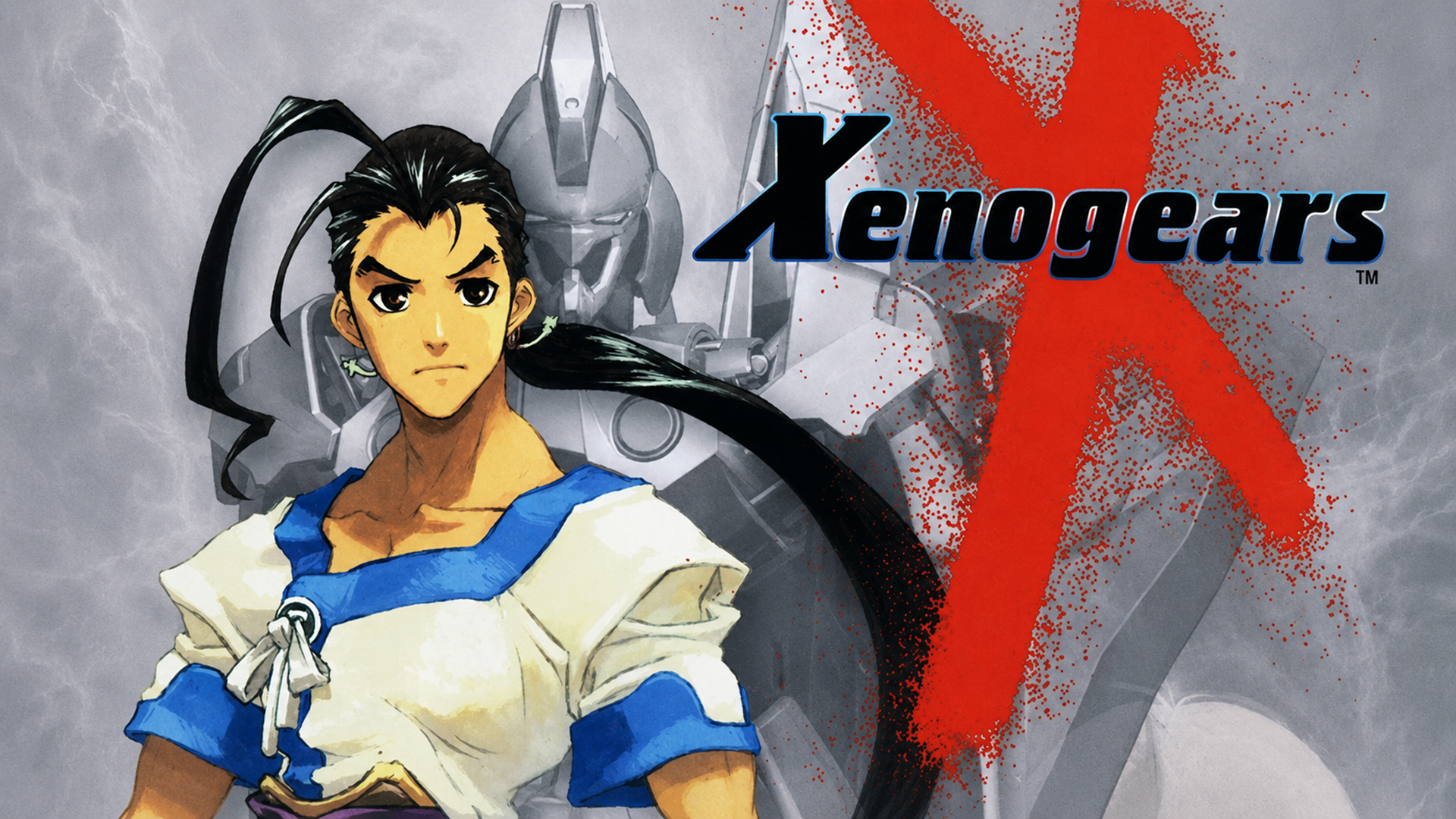
Xenogears Overview: The Quick Answer
Xenogears is a story-heavy PlayStation JRPG developed by Square, directed and written by Tetsuya Takahashi, with music by Yasunori Mitsuda, character design by Kunihiko Tanaka, and mechanical design by Junya Ishigaki. Its structure mixes on-foot character battles, Gear battles, exploration, long story scenes, and a late-game shift toward heavy narration.
| Category | What to know | Why it matters |
|---|---|---|
| Original platform | PlayStation | The game reflects late-1990s Square design: big ideas, limited hardware, and ambitious presentation. |
| Genre | Story-driven JRPG / mecha RPG | It blends martial-arts party combat with fuel-based giant robot battles. |
| Main protagonist | Fei Fong Wong | His identity, memory, and trauma shape the entire story. |
| Main heroine | Elly / Elehayym Van Houten | Her arc connects duty, empathy, romance, and the game’s larger cycle of recurrence. |
| Best known for | Dense story, philosophical themes, mecha combat, Mitsuda’s music, and Disc 2 | Xenogears is remembered as much for its ambition as for its unevenness. |
| Current availability note | Verify your regional storefront before buying | Do not assume a native modern remaster or port is available in your region. |
Xenogears Story Summary: From Lahan to the Machinery of “God”
Xenogears starts small. Fei lives in Lahan, a quiet village on the continent of Ignas. He has no clear memory of his past, but he has a place, friends, and a fragile sense of peace. That peace collapses when military forces clash near the village and Fei ends up piloting a mysterious Gear called Weltall.
The disaster at Lahan is not just an inciting incident. It defines the emotional shape of the game. Fei is not a clean heroic blank slate. He is blamed, traumatized, confused, and forced into exile. His journey begins less as a quest to save the world than as a search for what actually happened inside him.
From there, Xenogears expands into several connected conflicts: Aveh and Kislev’s long war, the rise of Gear warfare, the hidden agenda of Gebler, the church-like authority of Ethos, the concealed empire of Solaris, and the mystery of Deus. The story’s genius is not only that it gets bigger. It gets bigger while repeatedly changing the meaning of earlier scenes.

Main Characters in Xenogears
Xenogears has a large cast, but the central characters are not interchangeable party members. Most of them represent a different way of living under systems of war, faith, class, memory, or technological control.
| Character | Role | What they add to the story |
|---|---|---|
| Fei Fong Wong | Protagonist, painter, reluctant Gear pilot | Identity, trauma, repression, and the divided self. |
| Elly / Elehayym Van Houten | Gebler officer tied to Solaris | Duty, empathy, awakening, and the moral cost of propaganda. |
| Citan Uzuki | Doctor, mentor, knowledge-holder | Wisdom, secrecy, and the tension between protection and manipulation. |
| Bart Fatima | Desert pirate and royal heir | Rebellion, political legitimacy, and the surface struggle against manipulated rule. |
| Billy Lee Black | Ethos-linked gunner and support character | Faith, institutional betrayal, and moral disillusionment. |
| Rico Banderas | Kislev battler and social outsider | Imprisonment, spectacle, class, and racial othering. |
| Maria Balthasar | Shevat defender connected to Siebzehn | Family, engineering, childhood loss, and machines as emotional inheritance. |
| Emeralda | Nanomachine-linked being from ancient history | Ruins, artificial life, memory, and unfinished responsibility. |
| Chu-Chu | Non-human party member and tonal wildcard | Folk belief, absurdity, and contrast against the story’s severity. |
Main Antagonists and Power Structures
Xenogears works because its villains are not all doing the same thing. Some are political, some psychological, some theological, and some almost systemic.
| Force or antagonist | Function | Why they matter |
|---|---|---|
| Solaris | Hidden empire above the surface world | Embodies class hierarchy, social engineering, and normalized oppression. |
| Gebler | Military force tied to Solaris | Turns surface war into a tool of hidden imperial management. |
| Ethos | Religious and archaeological institution | Shows how faith, technology, and obedience can be fused into control. |
| Krelian | Central late-game antagonist | Represents grief, despair, and the urge to end suffering through domination. |
| Miang | Recurring manipulative presence | Personifies continuity, recurrence, and the system guiding history through people. |
| Grahf | Shadowy warrior linked to Fei’s past | Externalizes trauma, power without healing, and memory turned violent. |
| Ramsus | Solaris commander and rival figure | Shows how oppressive systems damage their agents as well as their victims. |
| Deus | Machine, weapon, and object of false divinity | Turns the language of God into machinery, biology, myth, and control. |
Xenogears Battle Mechanics: Deathblows, Ether, and Gear Combat
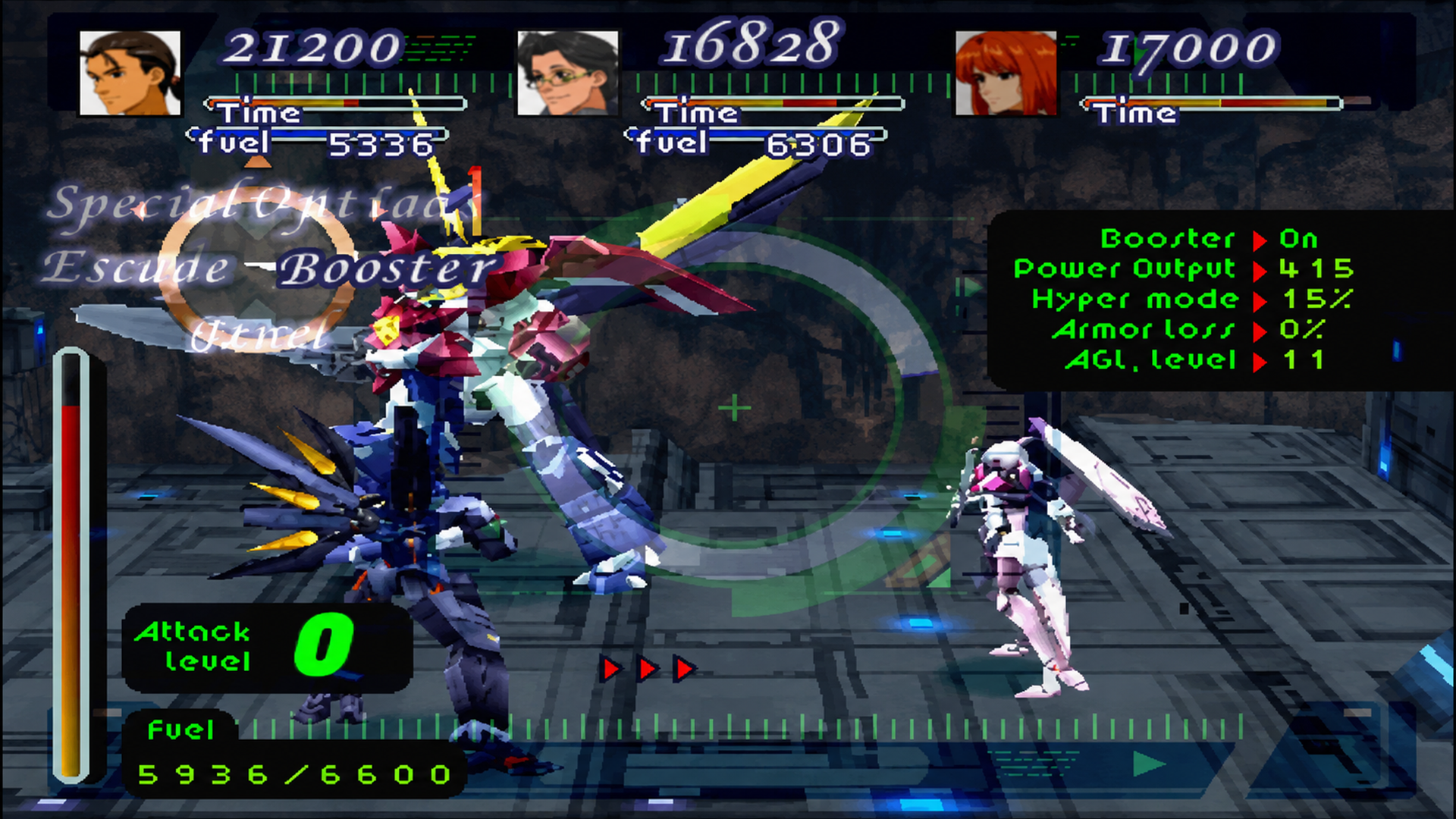
Xenogears uses two related battle systems: character battles and Gear battles. On foot, characters use attack strings that spend action points. Different button combinations build toward Deathblows, special martial-arts attacks that give the combat system its identity. The result is turn-based combat that feels more physical than menu-only RPG fighting.
Gear combat changes the resource logic. Instead of character action points, Gears depend on fuel. Attacks consume fuel, boosters increase speed at a cost, and Gear upgrades matter because Gears do not grow the same way characters do. That split is important. Xenogears is a game about human beings inside systems, so its combat also puts bodies inside machines.
The tradeoff is that the system can feel uneven today. Regular encounters are not always tactically demanding, and older RPG pacing means players should expect random battles, menu management, and some repetition. The best parts of the battle system are its thematic fit and Gear spectacle, not flawless encounter design.
Setting and Worldbuilding: A Planet Built on Buried Systems
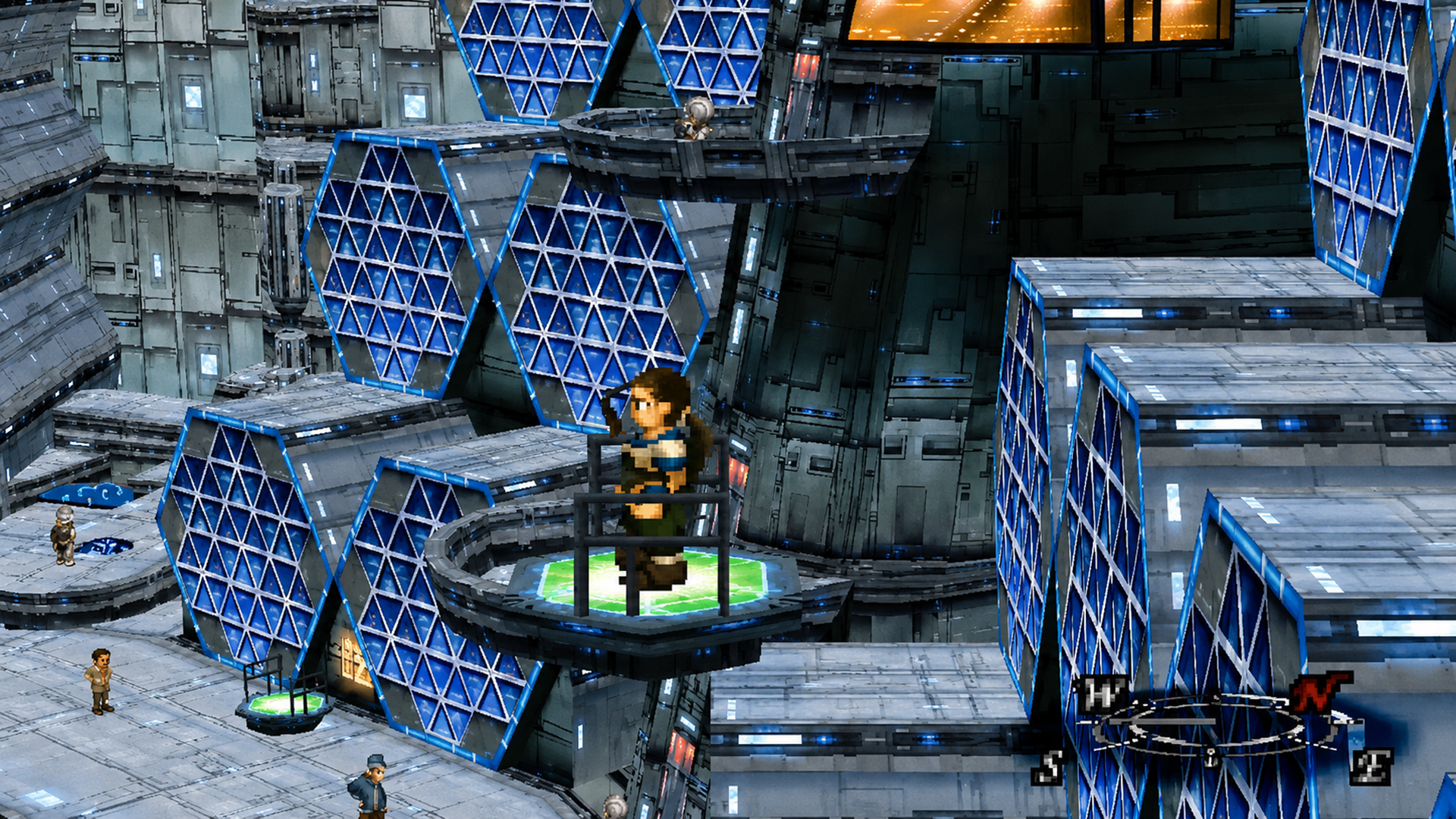
Xenogears’ world begins with familiar RPG geography: a village, a forest, a desert, a kingdom, a prison city. Then it keeps adding layers. Lahan is innocence lost. Aveh and Kislev are surface nations trapped in manipulated war. Nisan offers a softer religious and cultural counterpoint. The Thames turns the world into a lived-in sea culture. Shevat represents resistance, old knowledge, and aerial isolation. Solaris reveals the class structure behind the surface world. Zeboim connects the present to a ruined technological past.
The setting works because it treats civilization as archaeological. Every culture is living on top of older decisions. Every machine has a history. Every myth may be a distorted memory of technology.
Xenogears Music: Why Yasunori Mitsuda’s Score Matters
Yasunori Mitsuda’s Xenogears score is one of the game’s strongest artistic pillars. Square Enix Music’s official listing describes the soundtrack as a two-disc set with forty-four tracks, including the ending theme, and notes the use of Irish, Bulgarian, and Japanese folk music to create the game’s sound.
That folk influence matters. Xenogears is filled with machines, empires, and hidden systems, but the music often sounds ancient, human, and wounded. Tracks such as “Village Pride,” “A Distant Promise,” “Steel Giants,” “Shevat -The Wind Calls-,” “Solaris -Supernal Paradise-,” “Awakening,” “Fangs Bared at God,” and “Small Two of Pieces -Screeching Shards-” point to how carefully the soundtrack maps emotion to place and revelation.
Square Enix has continued to treat the music as a major part of the game’s legacy, with official releases such as the Original Soundtrack Revival Disc, the 20th Anniversary Concert Blu-ray, vinyl, arranged albums, and an orchestral album listed through Square Enix Music.
Visual Art and Presentation
Xenogears has a distinctive look: 2D character sprites moving through 3D environments, anime-style cutscenes, chunky mecha, rotating cameras, and a world that feels half fantasy, half industrial ruin. The presentation has aged unevenly. The sprite work still gives the characters charm, and the Gear designs remain memorable because they look functional, strange, and symbolic. But the camera, platforming, and some dungeon navigation can feel rough to modern players.
That roughness is part of the experience. Xenogears was trying to stage a gigantic story on late-1990s hardware. Its visual style is not polished in the modern sense, but it has identity. You remember its desert ships, floating cities, solemn churches, Gear hangars, and impossible endgame spaces because they feel like places in a myth that has been rebuilt out of machinery.
Xenogears Themes and Symbolism
Identity and the Divided Self
Fei’s arc is about integration. He is not simply trying to become stronger. He is trying to face the parts of himself that have been split off by trauma. Xenogears uses ideas associated with repression, alternate selves, memory, and the unconscious to make inner conflict playable and visible.
Religion, Institutions, and Control
Xenogears is not subtle about religious imagery, but its sharpest critique is institutional rather than purely theological. Ethos, Solaris, and Deus all show different ways belief can be organized into obedience. The game repeatedly asks who benefits when people are told their suffering is sacred, necessary, or natural.
Reincarnation and Recurrence
Cycles matter in Xenogears. People repeat roles. Civilizations repeat mistakes. Love, guilt, and violence echo across time. Reincarnation in the game is not just mystical decoration. It lets Xenogears examine whether people are doomed to replay inherited patterns or whether they can finally choose differently.
Technology as Theology
The title says it plainly: gears are not just robots. They are mechanisms of fate, war, identity, and godhood. Deus turns divinity into machinery. Nanomachines turn bodies into systems. Ancient ruins turn history into a technical manual that later societies misread as myth.
Love Versus Determinism
Fei and Elly’s relationship can be read romantically, but it also serves the game’s larger argument. If the world is built on cycles, programs, reincarnations, and control systems, then love becomes one of the few forces that might break repetition.
The Disc 2 Question
No serious Xenogears overview can ignore Disc 2. The second disc famously shifts toward heavy narration, with Fei and Elly recounting major events while the game presents fewer fully playable sequences. Kotaku’s 2017 interview with Tetsuya Takahashi explains that the team hit schedule limits and that Takahashi chose the shipped Disc 2 structure as a compromise so the story could be completed rather than ending after Disc 1.
That context matters because Disc 2 is not simply “unfinished” in the casual sense. It is a production compromise that affects pacing, exploration, and character development. Some arcs feel compressed. Some events sound summarized when they should have been played.
Yet Disc 2 also contains many of the ideas people remember most: the deepest revelations, the most direct philosophical conflict, and the full scale of what Xenogears was trying to say. It is flawed, but not disposable.
Who Xenogears Is For Today
Xenogears is worth approaching today if you like dense story-first RPGs, mecha fiction with political and spiritual stakes, games that mix psychology and science fiction, classic Square experimentation, and soundtracks that carry emotional and thematic weight.
It may not be the right fit if you need modern pacing, minimal cutscenes, fully voiced presentation, smooth cameras, balanced character development for every party member, or a clean final act without heavy narration.
The best way to approach Xenogears is not as a flawless classic. It is better understood as a huge, strange, deeply personal RPG that reaches further than its production could comfortably support.
FAQ
Is Xenogears connected to Xenosaga or Xenoblade?
Xenogears is part of the broader creative lineage associated with Tetsuya Takahashi and later Xeno projects, but it should not be treated as required homework for Xenosaga or Xenoblade. Think of it as a thematic ancestor rather than a simple direct continuity guide.
Is Xenogears still worth playing?
Yes, if you value story ambition, atmosphere, music, and thematic density over modern convenience. It is harder to recommend as a smooth gameplay experience than as a landmark narrative RPG.
Is Xenogears too confusing?
It can be. The story uses hidden histories, reincarnation, political manipulation, theology, psychology, and late-game exposition. The best approach is to follow the emotional arcs first: Fei’s identity, Elly’s awakening, Citan’s knowledge, Bart’s rebellion, Billy’s faith, and Krelian’s despair.
Does Xenogears have good combat?
It has memorable combat ideas rather than perfectly balanced combat. Deathblows make on-foot fights feel physical, while Gear battles add fuel management and machine upgrades. The systems fit the theme well, but encounter pacing and difficulty can feel dated.
Why is Xenogears’ music so praised?
The soundtrack gives the game emotional continuity. Square Enix Music notes Mitsuda’s use of Irish, Bulgarian, and Japanese folk influences, and that blend helps Xenogears feel ancient, mechanical, intimate, and sacred all at once.
Should new players read spoilers first?
Only lightly. Xenogears is built around revelations that reframe earlier events. New players should understand the premise, tone, and Disc 2 caveat, but avoid full ending summaries until after playing or watching the story.