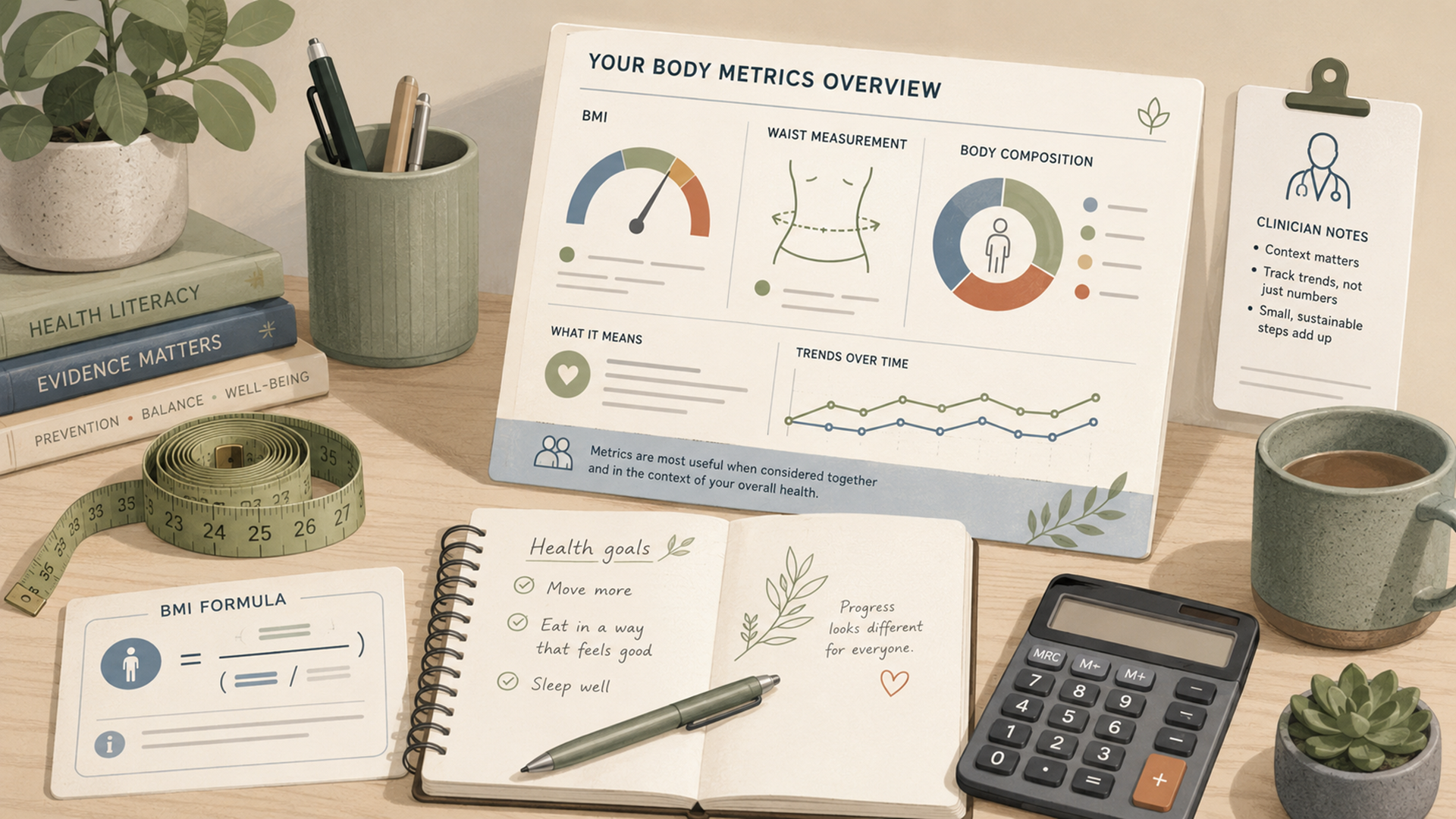
Quick answer: what is BMI?
BMI, or body mass index, is a simple calculation that compares your body weight with your height. For adults, it is often used as a quick screening tool to estimate whether body weight falls into an underweight, healthy weight, overweight, or obesity range. It is useful because it is fast, inexpensive, and easy to compare over time.
But BMI is not a full health diagnosis. It does not directly measure body fat, muscle, bone density, waist size, fitness, blood pressure, cholesterol, blood sugar, medical history, pregnancy, or how fat is distributed around the body. Think of BMI as a starting point for a better health conversation, not a verdict on your body.
Calculate your BMI the easier way
Use Jivaro LeanCraft to calculate BMI and view related body metrics in one place. LeanCraft supports metric and imperial units, BMI, estimated body fat, BMR, TDEE, goal calories, waist-to-height ratio, waist-to-hip ratio, lean mass, local measurement history, CSV export, and a copyable summary for personal tracking.
Medical note
This article is educational only. It is not medical advice, diagnosis, eating-disorder guidance, weight-loss treatment guidance, or a substitute for a qualified clinician. Do not start, stop, or change a medication, diet, exercise plan, supplement, or treatment because of a BMI number alone.
If you are pregnant, under age 20, recovering from an eating disorder, managing a chronic condition, taking weight-related medication, experiencing rapid unexplained weight change, or concerned about growth, appetite, fatigue, swelling, or other symptoms, discuss your situation with a qualified clinician.
What BMI actually measures
BMI measures weight relative to height. In metric units, it is your weight in kilograms divided by your height in meters squared. In U.S. customary units, it is your weight in pounds divided by height in inches squared, multiplied by 703.
The appeal of BMI is simplicity. Two people with different heights can compare a standardized weight-for-height number. Public health researchers can also use BMI to study weight categories across large populations. For an individual person, though, BMI should be interpreted with context.
BMI is a screen, not a diagnosis
CDC describes BMI as a screening measure and recommends considering it with other factors such as medical history, health behaviors, physical exam findings, and laboratory findings. That is the right frame: BMI can start a conversation, but it should not end one.
Use LeanCraft before doing the math by hand
You can calculate BMI manually, but calculators reduce unit mistakes. LeanCraft is especially useful if you want BMI alongside related body metrics instead of a single number in isolation.
1. Enter height and weight
Use either metric units or imperial units. LeanCraft lets you toggle units and convert the visible values.
2. Add waist and other measurements
Waist, hip, and neck measurements can add context that BMI alone misses, especially for fat distribution.
3. Review the full summary
Look at BMI alongside waist ratios, estimated body fat, lean mass, and calorie estimates rather than treating BMI as the only signal.
How to calculate BMI manually
Use the formula that matches your units. Keep height and weight in the same measurement system, and round your final BMI to one decimal place if you want an easy-to-read result.
BMI formula card
Metric formula
BMI = weight (kg) ÷ height² (m²)
Example: 75 kg ÷ 1.75² m = 75 ÷ 3.0625 = 24.5 BMI.
Imperial formula
BMI = weight (lb) ÷ height² (in²) × 703
Example: 170 lb ÷ 69² in × 703 = 25.1 BMI.
Manual formulas are useful for understanding what BMI is doing. For regular tracking, LeanCraft is easier because it handles units and shows related body metrics in the same dashboard.
Adult BMI categories
The standard adult categories below are commonly used for adults age 20 and older. These categories are screening ranges, not diagnoses. A clinician may interpret the same BMI differently depending on body composition, age, sex, pregnancy status, health history, medications, lab results, symptoms, and waist measurements.
| Adult BMI category | BMI range | What it can suggest | What to remember |
|---|---|---|---|
| Underweight | Less than 18.5 | Body weight is low relative to height. | May deserve clinical context, especially with fatigue, appetite change, illness, medication effects, or unintentional weight loss. |
| Healthy weight | 18.5 to less than 25 | Body weight falls in the standard adult healthy-weight screening range. | This does not automatically mean low risk; waist size, blood pressure, glucose, cholesterol, fitness, and habits still matter. |
| Overweight | 25 to less than 30 | Body weight is higher relative to height. | This may reflect excess body fat, but it can also reflect muscle, bone, body build, or other factors. |
| Obesity, class 1 | 30 to less than 35 | Higher weight-for-height range associated with higher average risk for several chronic conditions. | Risk is not determined by BMI alone. A clinician may look at waist size, labs, blood pressure, symptoms, and family history. |
| Obesity, class 2 | 35 to less than 40 | Higher BMI category with higher average risk in population studies. | Medical evaluation may be useful, especially if there are symptoms, high blood pressure, diabetes risk, sleep apnea, joint pain, or medication questions. |
| Obesity, class 3 | 40 or greater | Sometimes called severe obesity in adult BMI category systems. | Clinical context is important; BMI should be paired with health history, labs, functional status, and treatment goals. |
What BMI can suggest about health risks
BMI can be useful because weight categories outside the healthy-weight range are associated with higher average risk for certain health problems. CDC lists health risks associated with adult obesity such as high blood pressure, high cholesterol, type 2 diabetes, stroke, some cancers, mental health conditions, joint problems, and breathing problems such as asthma and sleep apnea.
Underweight can also be clinically relevant. A low BMI may reflect inadequate intake, malabsorption, chronic illness, medication effects, muscle loss, or other issues. It can also be normal for some people. The key is whether the number fits the person’s broader health picture.
A better question than “Is my BMI good?”
Ask: “What does my BMI mean when combined with my waist size, strength, fitness, blood pressure, cholesterol, blood sugar, sleep, medications, family history, and symptoms?” That question is more useful than judging health from one number.
When BMI can be misleading
BMI is convenient, but it can overestimate or underestimate health risk for specific people. Use extra caution in the situations below.
Athletes and muscular people
BMI cannot distinguish fat mass from lean mass. A strength athlete may have a high BMI because of muscle and bone mass rather than excess body fat.
Older adults
BMI may miss muscle loss, frailty, or changes in fat distribution. Strength, mobility, appetite, falls, and unintentional weight change may matter more.
Children and teens
Adult BMI categories do not apply to people ages 2 through 19. Children and teens are assessed using BMI-for-age percentiles.
Pregnancy
Standard adult BMI categories are not meant to interpret pregnancy weight gain. Prenatal care uses pregnancy-specific guidance and clinical monitoring.
Different ethnic backgrounds
Body composition and metabolic risk can vary across populations. BMI cutoffs may not represent risk equally for every group.
Normal BMI with central fat
A person can have a BMI in the healthy-weight range while still carrying higher-risk abdominal fat. Waist measurements can add useful context.
What to look at besides BMI
WHO describes BMI as a surrogate marker of fatness and notes that waist circumference can help with obesity assessment. NHLBI also emphasizes that BMI does not account for muscle mass, bone density, or body composition. In practice, the more useful picture usually includes several signals.
- Waist circumference: Helps estimate abdominal fat risk that BMI can miss.
- Waist-to-height ratio: Compares waist size with height and can be helpful for central adiposity context.
- Waist-to-hip ratio: Adds information about body-fat distribution.
- Body composition: Estimates fat mass and lean mass more directly than BMI.
- Blood pressure: A major cardiometabolic risk marker.
- Blood tests: Glucose, A1C, cholesterol, triglycerides, liver markers, thyroid testing, or other labs may be relevant depending on the person.
- Function and fitness: Strength, mobility, endurance, pain, sleep, and daily activity can matter as much as size.
- Health history: Medications, pregnancy, menopause, eating-disorder history, chronic illness, surgery, and family history can change interpretation.
LeanCraft is useful here because it keeps BMI next to waist ratios, estimated body fat, lean mass, and other body-metrics estimates. Those numbers are still estimates, but they create a more complete starting point than BMI alone.
How to use LeanCraft for BMI tracking
LeanCraft should be used as an informational dashboard, not a diagnosis engine. The goal is to track measurements clearly and bring better context to your own health decisions or clinician conversations.
- Enter accurate measurements. Height and weight drive BMI, while waist, hips, and neck help with body-composition estimates and ratios.
- Choose the right unit system. Metric and imperial inputs are supported. Avoid mixing kilograms with inches or pounds with centimeters when calculating manually.
- Review BMI with related metrics. Look at waist-to-height ratio, waist-to-hip ratio, estimated body fat, lean mass, BMR, and TDEE for broader context.
- Use history carefully. Local measurement history can help you notice trends, but short-term weight changes can reflect fluid, food, menstrual cycle, training, travel, illness, or medication changes.
- Copy or export your summary. A simple summary can make it easier to discuss goals or concerns with a clinician, dietitian, coach, or trainer.
Open LeanCraft and calculate your BMI
Manual math is helpful once. A calculator is better for ongoing tracking. Use LeanCraft to calculate BMI and view body metrics in one dashboard.
Questions to ask a clinician about BMI
If your BMI raises questions or does not match how you feel, bring the number into a broader conversation. Useful questions include:
- Does my BMI fit my body composition, age, sex, health history, and activity level?
- Should we also measure waist circumference, waist-to-height ratio, body composition, blood pressure, glucose, A1C, or cholesterol?
- Could medications, thyroid function, sleep, stress, menopause, pregnancy, fluid retention, or another condition be affecting my weight?
- Is my BMI changing quickly enough to deserve medical evaluation?
- Would my goals be better framed around strength, waist size, symptoms, labs, or function rather than weight alone?
- Do I need support from a registered dietitian, physical therapist, mental health professional, obesity medicine clinician, or other specialist?
Common BMI mistakes to avoid
Using BMI as a diagnosis
BMI is a screening number. It does not diagnose health, fitness, body fat percentage, or disease.
Ignoring waist size
Fat distribution matters. Waist-related measurements can add context that BMI cannot show.
Forgetting muscle mass
Muscle, bone, and body build can raise BMI even when body fat is not high.
Using adult categories for kids
Children and teens need BMI-for-age percentiles, not adult ranges.
Overreacting to one reading
Daily weight can change because of fluid, salt, digestion, training, hormones, travel, or illness.
Ignoring symptoms
Unexplained weight loss, swelling, fatigue, appetite changes, pain, or breathing issues deserve clinical attention.
FAQ: BMI and body mass index
What does BMI stand for?
BMI stands for body mass index. It is a weight-for-height calculation used as a quick screening measure for adults.
Is BMI the same as body fat percentage?
No. BMI does not directly measure body fat. It cannot separate fat mass from muscle, bone, or fluid.
What is the BMI formula?
Metric: weight in kilograms divided by height in meters squared. Imperial: weight in pounds divided by height in inches squared, multiplied by 703.
What BMI is considered healthy for adults?
The standard adult healthy-weight screening range is 18.5 to less than 25, but health risk depends on more than BMI.
Can BMI be wrong for athletes?
Yes. Athletes or muscular people may have a high BMI because BMI counts total weight, not whether that weight is muscle or fat.
Should I use BMI during pregnancy?
Do not use standard adult BMI categories to interpret pregnancy weight gain. Use prenatal care guidance from a qualified clinician.
Sources and method
This guide prioritized official health sources and conservative interpretation. BMI categories and formulas were checked against CDC and NHLBI sources, while limitations were checked against CDC, NHLBI, WHO, and AMA guidance.
- CDC: Adult BMI Categories
- CDC: Adult BMI Calculator
- CDC: BMI Frequently Asked Questions
- CDC: Child and Teen BMI Categories
- NHLBI: Calculate Your BMI
- WHO: Obesity and Overweight
- NHLBI/NCBI: BMI, Waist Circumference, and Associated Disease Risk Table
- American Medical Association: Role of BMI as a Measure in Medicine
- Jivaro LeanCraft: BMI & Body Metrics Calculator
Last source review for this draft: June 17, 2026.