Is Torrenting Legal? What Torrent Users Need to Know
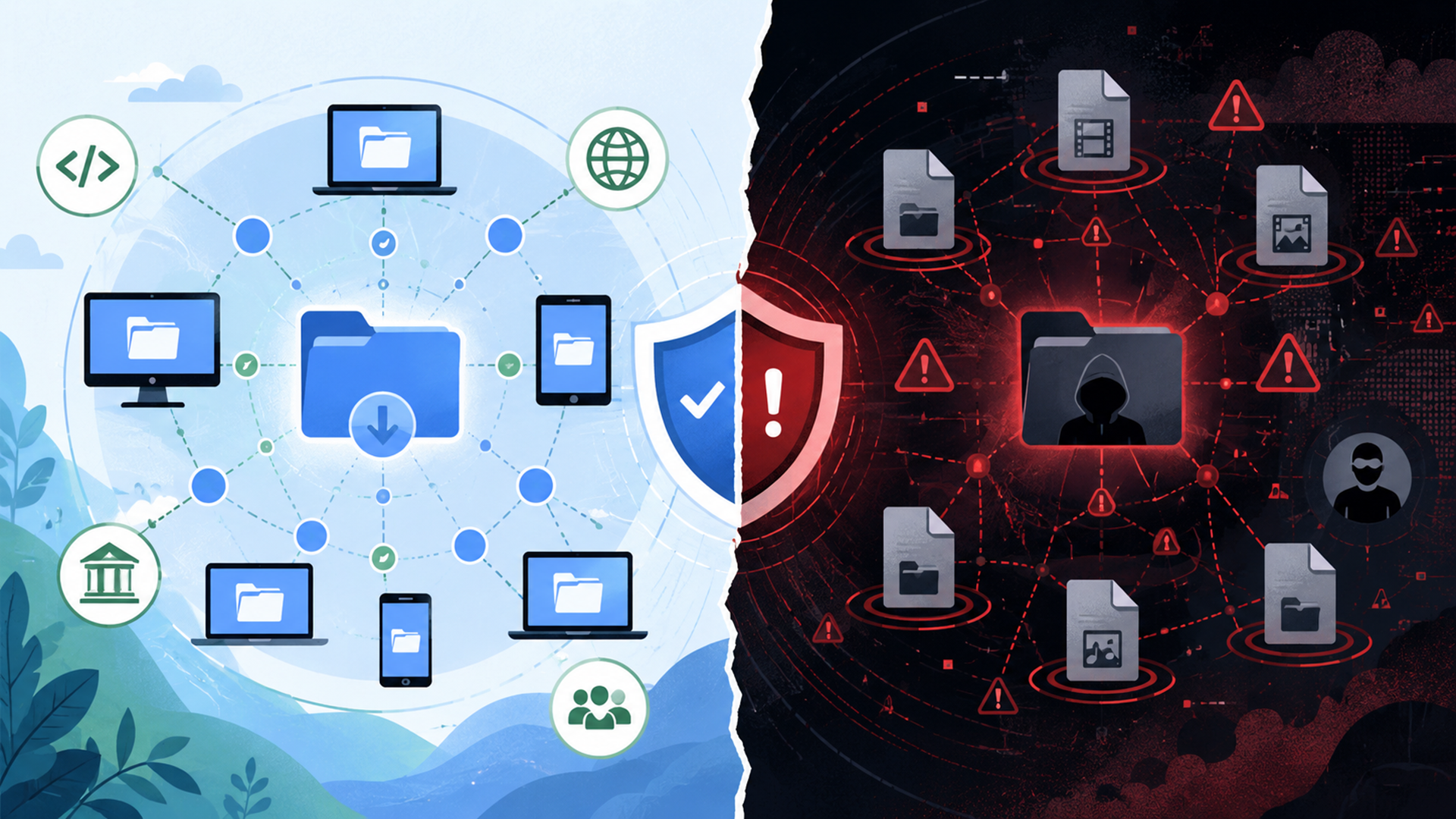
Torrenting is legal as a technology. What gets people, websites, and platforms into legal trouble is usually what is being shared, whether the copyright holder gave permission, and whether the service encouraged or organized infringement. A torrent used to download Ubuntu, public-domain media, or files the creator intentionally shared is very different from a torrent used to download a movie, game, album, ebook, or software package without authorization.
That distinction is the whole article. Torrenting is a file-distribution method. Copyright infringement is a legal violation. The two often overlap in public conversation, but they are not the same thing.
What torrenting actually is
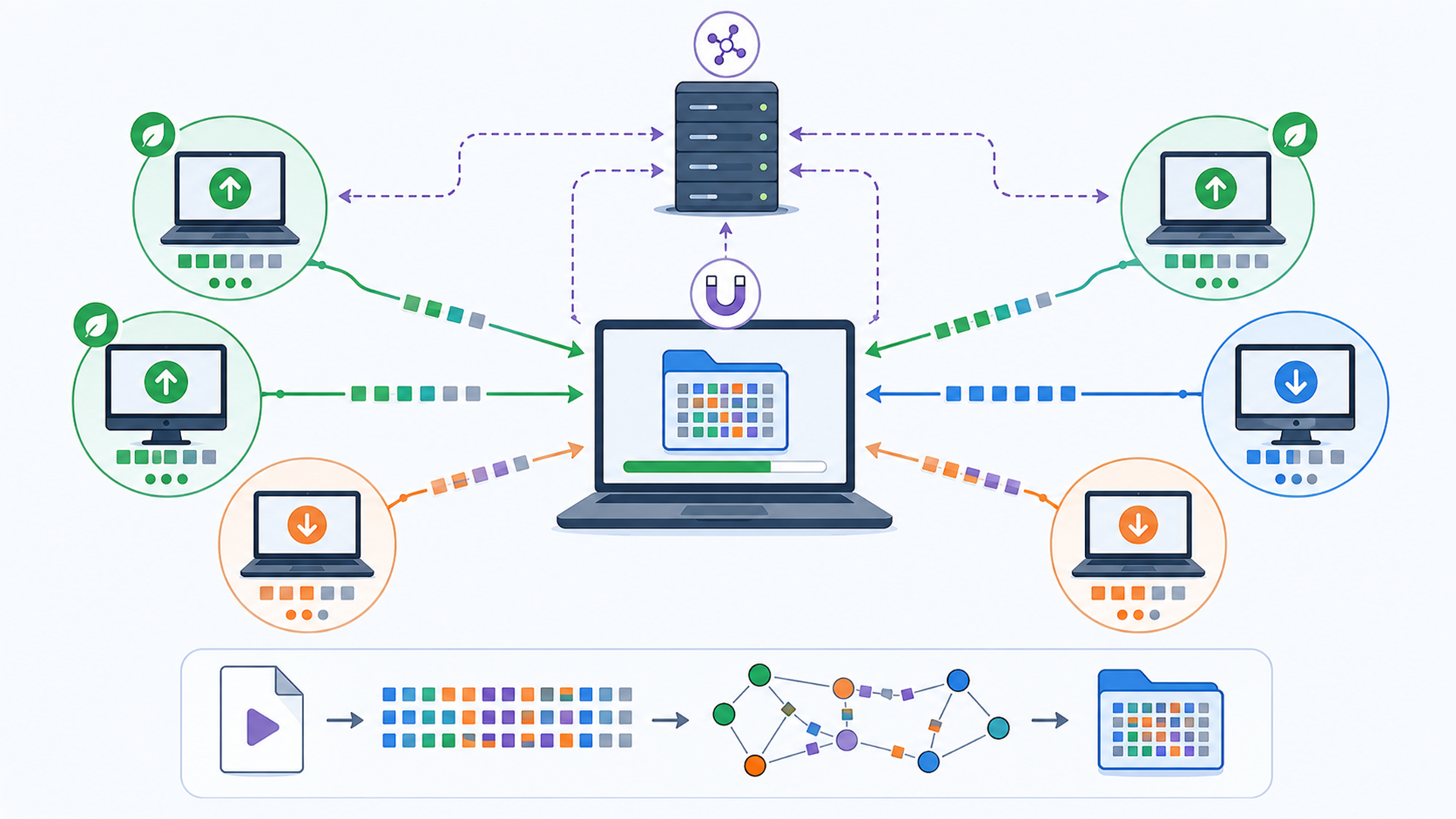
Torrenting usually refers to downloading and uploading files through the BitTorrent protocol, a peer-to-peer system where users share pieces of a file with each other instead of downloading everything from one central server. Ubuntu’s official download page describes BitTorrent as a peer-to-peer download network that can improve speed and reliability for large files, and the Internet Archive has used BitTorrent to distribute large public collections as a supplement to ordinary downloads.
A normal download looks like this: one server sends one file to your device. A torrent works differently: your client downloads pieces from multiple peers, verifies those pieces, and usually uploads pieces to other peers at the same time. That is why torrenting can be efficient, but it is also why legal risk can be higher than people expect: the user is often not just downloading. They may also be distributing.
| Term | Plain-English meaning | Why it matters |
|---|---|---|
| Torrent file | A small metadata file that tells a client what to download and where to find peers | It usually does not contain the actual movie, album, game, or app itself |
| Magnet link | A link that lets a torrent client find the torrent through its infohash rather than downloading a separate .torrent file first |
Common on modern torrent sites and search tools |
| Client | The app that opens the torrent or magnet link | Examples include BitTorrent clients and open-source clients |
| Peer | A user connected to the swarm | Peers may download and upload at the same time |
| Seeder | A peer with the complete file who is uploading it | More seeders usually means better availability |
| Leecher | A peer still downloading the file | The word is sometimes used loosely for people who download without uploading |
| Tracker / DHT | Peer-discovery systems that help clients find other users sharing the file | They help the swarm form, but they do not decide whether the content is lawful |
A Torrent Search tool is just a discovery layer. It can make torrents easier to find, but the legal question still depends on the file, the permission status, and the way the tool or user behaves.
Is torrenting legal?
Yes, torrenting can be legal. No, torrenting is not legal in every situation.
The clean rule is this: torrenting is lawful when the person sharing the file has the right to share it, and it becomes legally risky when copyrighted material is uploaded or downloaded without permission. In the U.S., the Copyright Office says uploading or downloading copyrighted works through peer-to-peer networks without the copyright owner’s authority infringes the owner’s reproduction and/or distribution rights; it also notes statutory damages can reach up to $30,000 per infringed work, or up to $150,000 per work if willful infringement is proven.
That is U.S.-specific language, but the basic idea is similar in many copyright systems: the technology is not the legal problem by itself. Unauthorized copying and distribution are the problem.
| Scenario | Usually legal? | Why |
|---|---|---|
| Downloading an official Linux ISO via torrent | Yes | The publisher intentionally offers the file through BitTorrent |
| Downloading public-domain materials from an archive torrent | Yes | The material is distributed through a lawful public collection |
| Sharing your own files with a private group by torrent | Usually yes | You control the rights, assuming no third-party copyrighted content is included |
| Downloading a newly released movie without permission | No / high risk | The copyright holder did not authorize the copy or distribution |
| Seeding a commercial game, album, ebook, or app without permission | No / high risk | Seeding distributes the work to others |
| Running a torrent index that promotes infringing downloads | High risk | Courts have treated inducement, indexing, and facilitation as legally significant |
Why torrents create more legal risk than ordinary downloads
Torrenting often turns one user into both a downloader and an uploader. That matters because copyright law gives rights holders control over reproduction and distribution, and BitTorrent swarms are built around distribution. Even if a user thinks they are “just downloading,” the client may be uploading pieces to other peers in the background.
That does not make every torrent illegal. It does mean the old excuse of “I only downloaded it” is weaker in a peer-to-peer context than it might sound. The protocol is designed for sharing.
The second risk is visibility. In many public swarms, peer IP addresses can be visible to other participants. A VPN or proxy may change what others see at the network layer, but it does not make unauthorized content lawful. Jivaro’s common torrenting mistakes guide is useful for security basics, but the legal rule stays the same: privacy tools protect privacy; they do not create copyright permission.
Legal torrenting examples
The easiest way to understand legal torrenting is to look at publishers that openly use it.
Ubuntu offers BitTorrent links on its official alternative downloads page and describes BitTorrent as a peer-to-peer download method that can improve speed and reliability for large files. The Internet Archive says it has distributed public collections through BitTorrent since 2012, with more than 1.4 million Archive items available through the protocol at the time described in its help center.
- Open-source operating systems and software images
- Public-domain books, films, music, and archival media
- Creative Commons files where the license allows redistribution
- Game patches, mods, or files intentionally shared by the rights holder
- Personal or organizational file distribution where the uploader owns or controls the rights
This is where torrenting is at its best: large files, many users, lower server strain, and no copyright ambiguity.
Where torrenting becomes illegal
Torrenting becomes a legal problem when it crosses into unauthorized copying or distribution. That usually happens with commercial movies, TV shows, music, games, books, software, paid courses, and cracked applications.
The legal analysis is not only about whether the torrent file itself contains copyrighted content. Courts have also looked at whether a platform indexed infringing files, helped users find them, encouraged infringing use, ignored takedown obligations, or built a business model around infringement.
That is why a torrent index can be riskier than it looks. A metadata-only site may not host the movie or game itself, but metadata, search, categories, magnet links, and user prompts can still become part of a broader infringement case depending on how the service is built and promoted.
The legal history that shaped torrenting
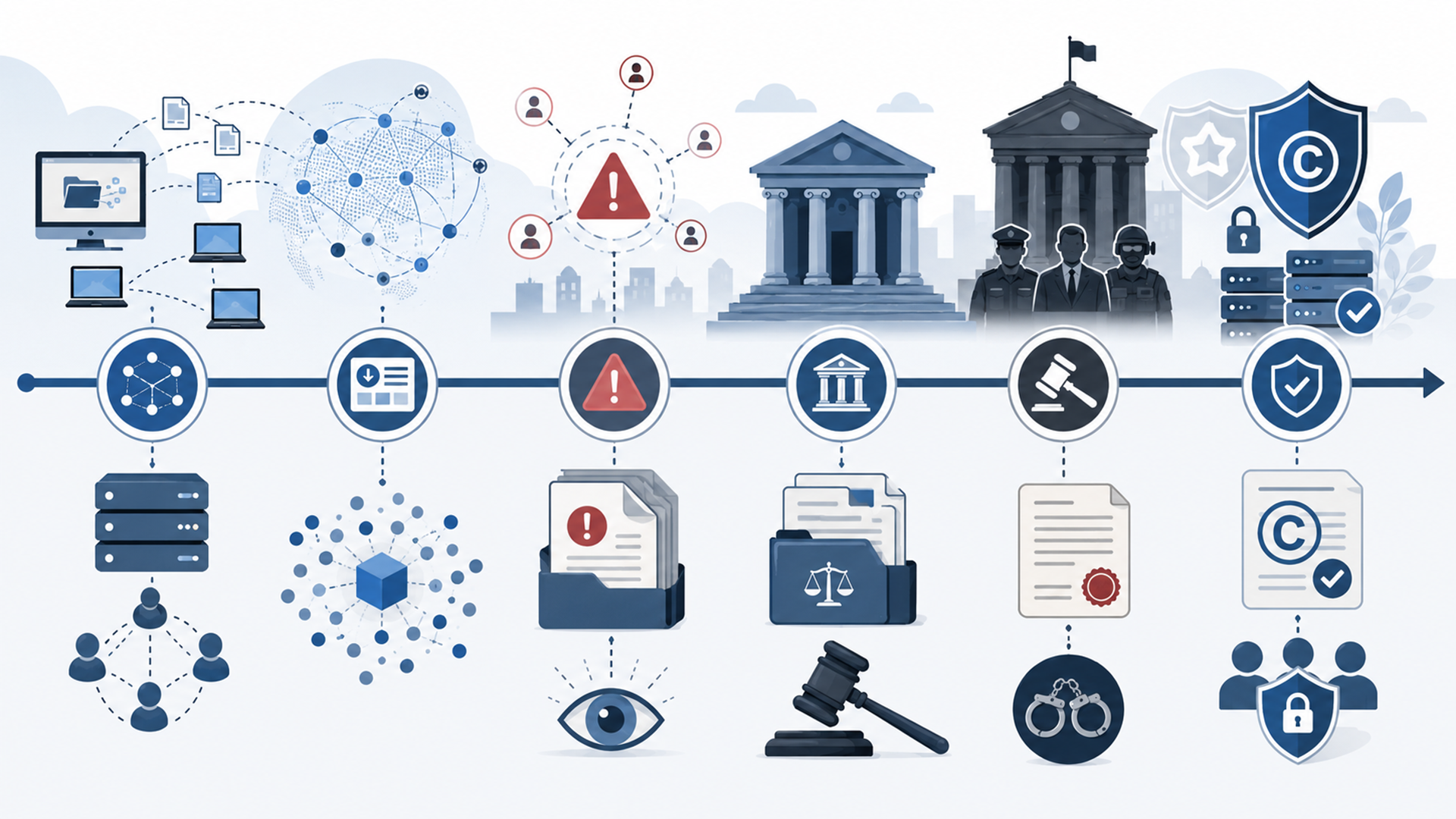
Torrent law did not appear all at once. It developed through music-sharing cases, peer-to-peer software cases, torrent index cases, and large file-hosting enforcement actions. The pattern is clear: courts tend to separate neutral technology from conduct that promotes, organizes, or profits from infringement.
Napster: peer-to-peer sharing hits the courtroom
Napster was not a BitTorrent case, but it shaped how courts viewed peer-to-peer file sharing. In A&M Records, Inc. v. Napster, Inc., the Ninth Circuit held that transferring copyrighted music files through Napster’s peer-to-peer network was not fair use. The Copyright Office’s fair-use summary notes that the court viewed the use as non-transformative, commercial in effect, generally involving entire creative works, and harmful to the market for authorized digital music.
The important lesson from Napster is that “people are sharing it with each other” does not automatically make copying lawful. Peer-to-peer architecture did not erase copyright.
Grokster: technology is not automatically liable, but inducement matters
In MGM Studios, Inc. v. Grokster, Ltd., the U.S. Supreme Court focused on inducement. The Court dealt with peer-to-peer software that could have lawful uses, but it held that distributing a product with the object of promoting copyright infringement can create liability for the resulting infringement by users.
That distinction still matters. A neutral tool with substantial lawful uses is different from a service designed, marketed, or operated to encourage infringement. The law is not only looking at the code. It is looking at the behavior around the code.
The Pirate Bay: indexing and facilitation can matter
The Pirate Bay became one of the defining torrent-site cases because it forced courts to look at indexing, search, categorization, and facilitation. The European Court of Human Rights summarized the Swedish proceedings by noting that two Pirate Bay co-founders were involved in running one of the world’s largest file-sharing services, were charged with complicity under Swedish copyright law, and ultimately faced prison sentences and damages after Swedish court proceedings. The ECHR rejected their freedom-of-expression challenge as manifestly ill-founded.
The Court of Justice of the European Union later addressed The Pirate Bay in Stichting Brein v. Ziggo. It held that making available and managing an online sharing platform that indexes metadata and provides a search engine so users can locate and share protected works can amount to a “communication to the public” under EU copyright law.
The practical takeaway is blunt: a site does not need to host the actual movie file to face legal exposure. Helping people find and download unauthorized works can be enough, especially when the service is organized around that purpose.
isoHunt: DMCA safe harbor has limits
The isoHunt case, Columbia Pictures Industries, Inc. v. Fung, dealt directly with BitTorrent indexing sites. The Ninth Circuit described allegations that Gary Fung and his company’s sites induced users to download infringing copies of studio works, affirmed liability issues, and rejected the argument that inducement liability was inherently incompatible with DMCA safe harbor protections.
That case is important because it shows why “we only index torrents” is not a complete defense. If the surrounding conduct points to inducement, courts may look past the metadata label and examine what the service actually enabled.
Megaupload: file hosting can face the same copyright logic
Megaupload was not a torrent site, but it belongs in this history because it showed how aggressively authorities could pursue large-scale online file-sharing operations. In 2012, the U.S. Department of Justice charged seven individuals and two corporations with running what it described as an international criminal enterprise responsible for massive worldwide online piracy, alleging more than $175 million in criminal proceeds and more than half a billion dollars in harm to copyright owners.
In 2015, DOJ announced that Andrus Nomm, a programmer connected to the Megaupload case, pleaded guilty to conspiring to commit felony copyright infringement and was sentenced to a year and a day in federal prison.
The lesson is broader than torrents: courts and prosecutors care about scale, incentives, takedown behavior, business model, and whether a platform appears to profit from unauthorized distribution.
Kickass Torrents: domain seizures and international enforcement
Kickass Torrents showed the international side of enforcement. In 2016, the U.S. Attorney’s Office for the Northern District of Illinois announced charges against Artem Vaulin, the alleged owner of Kickass Torrents, and said authorities seized domain names associated with the site. The DOJ release described KAT as a commercial website that allegedly enabled users to reproduce and distribute hundreds of millions of copies of copyrighted works, and it emphasized that the charges were allegations at that stage.
That case is a reminder that torrent enforcement is not limited to one country’s borders. Domains, servers, payment systems, advertisers, and operators can sit in different jurisdictions, and enforcement can still reach across borders.
What ordinary torrent users should take from these cases
The cases above were mostly about platforms and operators, but the user-level lesson is still clear.
First, do not assume a file is legal just because it is easy to find. A search result, magnet link, or high seeder count says nothing about permission. Second, remember that torrenting often uploads while downloading, so the legal analysis may involve distribution, not just personal copying. Third, privacy tools can reduce exposure of your IP address, but they do not change the copyright status of the file. Fourth, if the file is a commercial work that normally costs money and the rights holder is not offering it through that torrent, treat it as high-risk.
| User action | Practical risk level | Better approach |
|---|---|---|
| Downloading official open-source software torrents | Low | Use official publisher links |
| Downloading public-domain torrents from a trusted archive | Low | Confirm the archive and rights status |
| Downloading “free” copies of paid movies, shows, games, or software | High | Use licensed services or authorized downloads |
| Seeding copyrighted files without permission | High | Stop sharing files you do not have rights to distribute |
| Using a VPN and assuming that makes infringement legal | High misunderstanding risk | Treat VPNs as privacy tools, not legal permission |
What torrent site operators should understand
The biggest legal risk for operators is not the word “torrent.” It is the combination of indexing, search, categories, user prompts, infringement notices, monetization, and public messaging. The more a site looks like it is built to help people find unauthorized copyrighted files, the more dangerous the legal position becomes.
- Index only torrents you have permission to list.
- Avoid scraping public torrent indexes.
- Make the rights status of each listed torrent clear.
- Remove unauthorized content quickly when notified.
- Avoid marketing that encourages piracy.
- Keep logs, moderation workflows, and takedown procedures organized.
- Separate lawful torrent technology from infringing content.
This is also why the technical architecture matters. A small metadata index for approved files is a different risk profile from a public piracy search engine. Jivaro’s public torrent search engine guide is useful because it treats the search engine as a controlled database project rather than a crawler pointed at the wider torrent ecosystem.
FAQ
Is torrenting illegal in the United States?
Torrenting itself is not illegal in the United States. Uploading or downloading copyrighted works through peer-to-peer networks without the copyright owner’s authority can be infringement, according to the U.S. Copyright Office.
Is a torrent file illegal?
Not automatically. A torrent file is usually metadata. The legal issue is what the torrent points to, whether the content is authorized, and whether the person or platform sharing it is encouraging or enabling infringement.
Can you get sued for torrenting?
Yes, especially if the torrent involves copyrighted material shared without permission. The risk varies by country, rightsholder, enforcement strategy, and user conduct, but the legal exposure is real.
Does using a VPN make torrenting legal?
No. A VPN can affect privacy and network visibility, but it does not create permission to copy or distribute copyrighted material.
Are torrent search engines illegal?
Not automatically. A torrent search engine that indexes lawful torrents or user-provided authorized files is very different from one that organizes, promotes, or profits from unauthorized copyrighted content. The Pirate Bay and isoHunt cases show that indexing and search features can matter legally when they help users find infringing works.
Is seeding more legally risky than downloading?
Often, yes. Seeding means distributing pieces of a file to other users. Since copyright law cares about distribution as well as copying, seeding unauthorized copyrighted works can increase the risk.
Conclusion
Torrenting is not the crime. Unauthorized copying and distribution are the problem.
The protocol is neutral. The file is not always neutral. The platform around it is not always neutral. That is the difference courts have been drawing for more than two decades, from Napster and Grokster to The Pirate Bay, isoHunt, Megaupload, and Kickass Torrents.
A strong rule of thumb is this: if the creator, publisher, archive, or rights holder clearly offers the torrent, it is probably a normal file-distribution method. If the torrent is a free copy of something normally sold, streamed, licensed, or restricted, assume there is legal risk until proven otherwise. Torrenting is powerful because it distributes files efficiently. That same power is why the law takes it seriously.
References
- U.S. Copyright Office: Copyright and Digital Files FAQ
- Ubuntu: Alternative downloads and BitTorrent
- Internet Archive: Archive BitTorrents
- A&M Records, Inc. v. Napster, Inc. — U.S. Copyright Office Fair Use Index summary
- MGM Studios, Inc. v. Grokster, Ltd. — U.S. Supreme Court opinion
- Columbia Pictures Industries, Inc. v. Fung — Ninth Circuit opinion
- ECHR: Pirate Bay co-founders’ conviction press release
- CJEU / Stichting Brein v. Ziggo judgment text
- DOJ: Megaupload charges announcement
- DOJ: Megaupload conspiracy guilty plea announcement
- DOJ: Kickass Torrents charges announcement