
 Image 1 of 1
Research Gap-to-Paper Workflow Kit
Move from a vague research idea, assigned topic, pile of PDFs, existing dataset, or partial draft to a structured research paper workflow.
Research Gap-to-Paper Workflow Kit is a full AI-assisted research workflow package built for students, independent researchers, academic writers, professionals, and educators who want a more organized way to develop research papers, literature reviews, proposals, reports, and manuscript drafts.
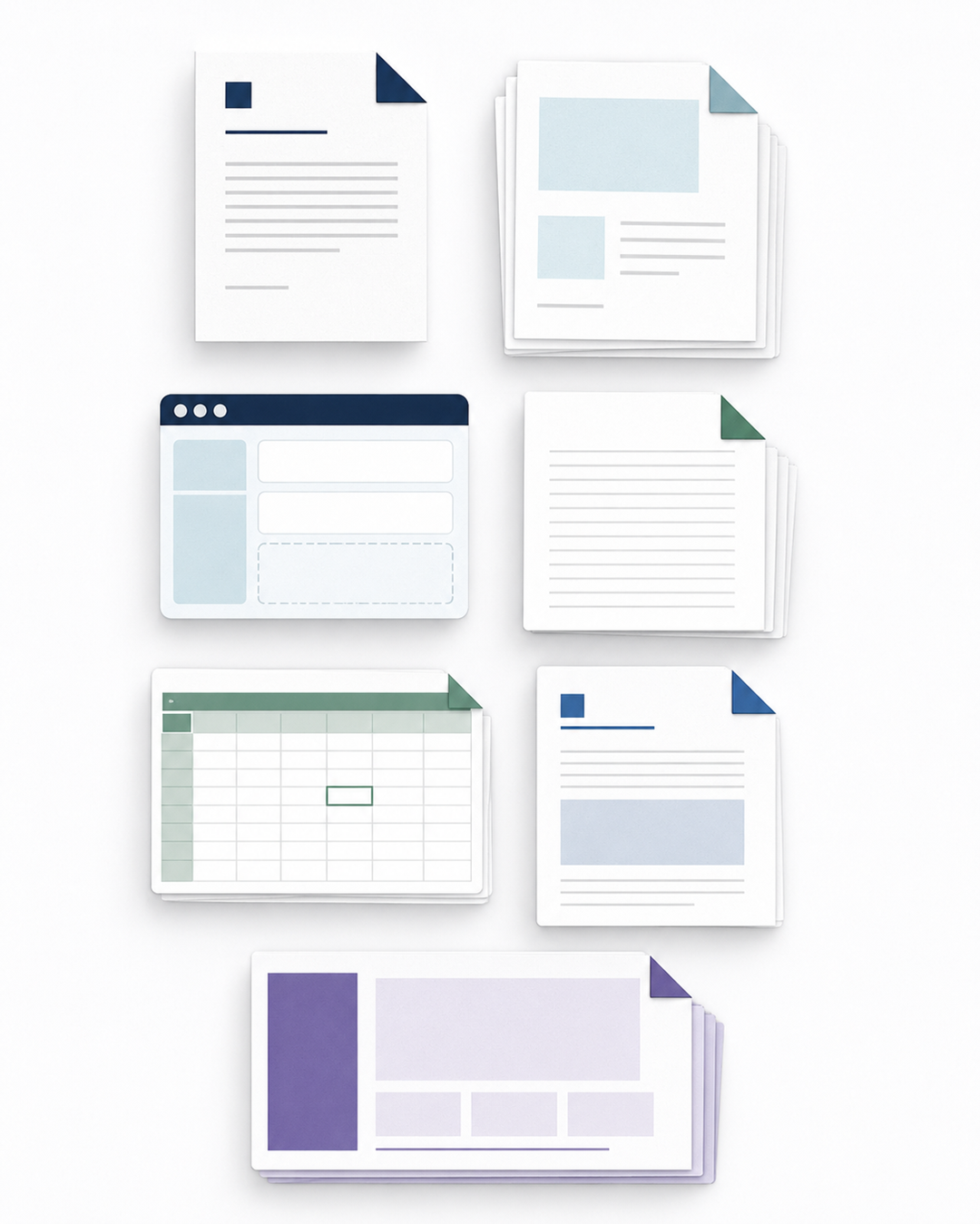
This is not just a prompt pack. The final package includes a browser-based Prompt Builder, reference TXT prompts, PDF guides, spreadsheet workbooks, Word templates, PowerPoint decks, and standalone local HTML tools.
What it is
This kit helps users move through the research process step by step:
Idea → Topic narrowing → Literature gathering → Source extraction → Literature synthesis → Gap validation → Research question → Study or experiment design → Data collection → Data input → Analysis support → Paper outline → Draft → Abstract → Tables → Figures → Citation and claim verification → Final manuscript preparation
The main user experience is the Research Gap-to-Paper Prompt Builder, a local browser tool that lets users choose a workflow stage, fill in guided fields, copy the generated prompt, and paste it into a premium AI assistant.
The individual TXT prompts are included as backup/reference files for users who prefer plain text or want to edit prompts manually.
What’s included
The final ZIP package includes 59 customer-facing files organized into seven main sections:
Start file
00_READ_ME_FIRST.txt
A navigation file explaining what to open first, how to choose a starting path, and how to use the kit responsibly.
6 PDF guides
Start-Here Quick Guide
Comprehensive Workflow Manual
Research Gap and Question Quality Guide
What to Paste Into the LLM Examples
Mini Example Paper Pack
Academic Integrity, AI Disclosure, and Final Quality Checklist
These guides explain how to use the kit, choose a workflow path, prepare clean AI inputs, validate research gaps, avoid common mistakes, and check the final manuscript.
1 browser-based Prompt Builder
Research Gap-to-Paper Prompt Builder HTML app
This is the main interface for the workflow. It includes all 20 workflow prompts in one local browser app, with guided fields, prompt preview, copy-to-clipboard, download prompt, and clear-field controls.
20 reference TXT prompts
The reference prompt folder includes prompts for:
starting point and goal clarification
no-idea topic generation
topic narrowing
literature gathering strategy
source extraction
literature matrix building
literature synthesis
research gap validation
research question and hypothesis building
study or experiment design selection
data collection planning
data input formatting
analysis and results interpretation
paper outlining
paper drafting
abstract writing
research tables
research figure prompts
citation, claim, and integrity verification
source credibility scoring
4 spreadsheet workbooks
Project Planning Workbook
Literature and Gap Validation Workbook
Data Input Workbook
Drafting and Integrity Workbook
These workbooks help users track project intake, research questions, study design, data collection, advisor feedback, literature searches, source credibility, gap validation, survey data, interview transcripts, experiment results, secondary data, content analysis, case study notes, outlines, draft progress, citation verification, and AI-use logs.
18 Word templates
The kit includes abstract page templates and manuscript body templates in:
Times New Roman
Arial
Calibri
US Letter
A4
single-column manuscript format
dual-column manuscript format
These templates help users prepare abstract pages and manuscript body documents with standard research-paper sections.
3 PowerPoint decks
Research Gap-to-Paper Workflow Training Deck
Research Presentation Mini-Kit
Supervisor / Advisor Update Deck
These decks help users learn the workflow, present a research proposal or project, and communicate progress to a professor, advisor, client, supervisor, or team.
6 standalone local HTML apps
Research Path Router
Boolean Search String Builder
Research Gap Evidence Board
LLM Input Block Formatter
Data Anonymizer and Input Cleaner
Experiment Random Assignment Generator
These tools open in a browser and do not require a server, login, API, or external library.
Who it’s for
This kit is useful for:
students starting a research paper
graduate students planning a thesis, capstone, seminar paper, or proposal
independent researchers organizing a paper idea
professionals preparing research-style reports
academic writers building a literature review or manuscript draft
educators or advisors who want a structured research workflow
users who already have PDFs, source notes, future-research suggestions, existing data, or a partial draft
How it works
Open 00_READ_ME_FIRST.txt.
Read the Start-Here Quick Guide.
Open the Research Gap-to-Paper Prompt Builder.
Choose the prompt tab that matches your current stage.
Fill in the guided fields.
Copy the generated prompt into a premium AI assistant.
Save useful outputs into the matching workbook, Word template, or presentation deck.
Use the supporting HTML tools when you need routing, Boolean search strings, gap tracking, input formatting, anonymization, or random assignment.
Use the final verification prompts and checklist before submitting or publishing anything.
When ready, export the abstract page and manuscript body as PDFs and combine them with Jivaro PDF Patchbox.
Requirements
To use the full kit, you should have access to:
a premium or high-capability AI assistant
a modern web browser
Microsoft Word or a compatible document editor
Microsoft Excel or a compatible spreadsheet editor
PowerPoint or a compatible presentation editor
your own sources, notes, data, draft material, or research context
The workflow is designed for careful research support, not one-click paper generation.
Important notes
This kit does not replace a professor, supervisor, ethics board, statistician, institutional review process, journal requirements, or human judgment.
Users are responsible for verifying sources, citations, claims, data, methods, tables, figures, and AI-assisted outputs before submitting or publishing any work.
Do not use the kit to invent sources, fake citations, fabricate data, pretend an experiment happened, or submit unchecked AI output.
The Prompt Builder and supporting HTML apps are local browser tools. Some fields may save low-risk entries locally in the user’s browser. Sensitive participant data, private business data, interview transcripts, or identifying details should be anonymized and handled according to applicable rules before being used with any AI tool.
The product files are licensed for personal, educational, and internal research workflow use. You may use the outputs you create from the kit, but you may not resell, redistribute, publish, share, repackage, or commercially reuse the kit files themselves.
A complete research workflow kit for turning ideas, sources, gaps, data, and drafts into a more organized AI-assisted research paper process.
Move from a vague research idea, assigned topic, pile of PDFs, existing dataset, or partial draft to a structured research paper workflow.
Research Gap-to-Paper Workflow Kit is a full AI-assisted research workflow package built for students, independent researchers, academic writers, professionals, and educators who want a more organized way to develop research papers, literature reviews, proposals, reports, and manuscript drafts.
This is not just a prompt pack. The final package includes a browser-based Prompt Builder, reference TXT prompts, PDF guides, spreadsheet workbooks, Word templates, PowerPoint decks, and standalone local HTML tools.
What it is
This kit helps users move through the research process step by step:
Idea → Topic narrowing → Literature gathering → Source extraction → Literature synthesis → Gap validation → Research question → Study or experiment design → Data collection → Data input → Analysis support → Paper outline → Draft → Abstract → Tables → Figures → Citation and claim verification → Final manuscript preparation
The main user experience is the Research Gap-to-Paper Prompt Builder, a local browser tool that lets users choose a workflow stage, fill in guided fields, copy the generated prompt, and paste it into a premium AI assistant.
The individual TXT prompts are included as backup/reference files for users who prefer plain text or want to edit prompts manually.
What’s included
The final ZIP package includes 59 customer-facing files organized into seven main sections:
Start file
00_READ_ME_FIRST.txt
A navigation file explaining what to open first, how to choose a starting path, and how to use the kit responsibly.
6 PDF guides
Start-Here Quick Guide
Comprehensive Workflow Manual
Research Gap and Question Quality Guide
What to Paste Into the LLM Examples
Mini Example Paper Pack
Academic Integrity, AI Disclosure, and Final Quality Checklist
These guides explain how to use the kit, choose a workflow path, prepare clean AI inputs, validate research gaps, avoid common mistakes, and check the final manuscript.
1 browser-based Prompt Builder
Research Gap-to-Paper Prompt Builder HTML app
This is the main interface for the workflow. It includes all 20 workflow prompts in one local browser app, with guided fields, prompt preview, copy-to-clipboard, download prompt, and clear-field controls.
20 reference TXT prompts
The reference prompt folder includes prompts for:
starting point and goal clarification
no-idea topic generation
topic narrowing
literature gathering strategy
source extraction
literature matrix building
literature synthesis
research gap validation
research question and hypothesis building
study or experiment design selection
data collection planning
data input formatting
analysis and results interpretation
paper outlining
paper drafting
abstract writing
research tables
research figure prompts
citation, claim, and integrity verification
source credibility scoring
4 spreadsheet workbooks
Project Planning Workbook
Literature and Gap Validation Workbook
Data Input Workbook
Drafting and Integrity Workbook
These workbooks help users track project intake, research questions, study design, data collection, advisor feedback, literature searches, source credibility, gap validation, survey data, interview transcripts, experiment results, secondary data, content analysis, case study notes, outlines, draft progress, citation verification, and AI-use logs.
18 Word templates
The kit includes abstract page templates and manuscript body templates in:
Times New Roman
Arial
Calibri
US Letter
A4
single-column manuscript format
dual-column manuscript format
These templates help users prepare abstract pages and manuscript body documents with standard research-paper sections.
3 PowerPoint decks
Research Gap-to-Paper Workflow Training Deck
Research Presentation Mini-Kit
Supervisor / Advisor Update Deck
These decks help users learn the workflow, present a research proposal or project, and communicate progress to a professor, advisor, client, supervisor, or team.
6 standalone local HTML apps
Research Path Router
Boolean Search String Builder
Research Gap Evidence Board
LLM Input Block Formatter
Data Anonymizer and Input Cleaner
Experiment Random Assignment Generator
These tools open in a browser and do not require a server, login, API, or external library.
Who it’s for
This kit is useful for:
students starting a research paper
graduate students planning a thesis, capstone, seminar paper, or proposal
independent researchers organizing a paper idea
professionals preparing research-style reports
academic writers building a literature review or manuscript draft
educators or advisors who want a structured research workflow
users who already have PDFs, source notes, future-research suggestions, existing data, or a partial draft
How it works
Open 00_READ_ME_FIRST.txt.
Read the Start-Here Quick Guide.
Open the Research Gap-to-Paper Prompt Builder.
Choose the prompt tab that matches your current stage.
Fill in the guided fields.
Copy the generated prompt into a premium AI assistant.
Save useful outputs into the matching workbook, Word template, or presentation deck.
Use the supporting HTML tools when you need routing, Boolean search strings, gap tracking, input formatting, anonymization, or random assignment.
Use the final verification prompts and checklist before submitting or publishing anything.
When ready, export the abstract page and manuscript body as PDFs and combine them with Jivaro PDF Patchbox.
Requirements
To use the full kit, you should have access to:
a premium or high-capability AI assistant
a modern web browser
Microsoft Word or a compatible document editor
Microsoft Excel or a compatible spreadsheet editor
PowerPoint or a compatible presentation editor
your own sources, notes, data, draft material, or research context
The workflow is designed for careful research support, not one-click paper generation.
Important notes
This kit does not replace a professor, supervisor, ethics board, statistician, institutional review process, journal requirements, or human judgment.
Users are responsible for verifying sources, citations, claims, data, methods, tables, figures, and AI-assisted outputs before submitting or publishing any work.
Do not use the kit to invent sources, fake citations, fabricate data, pretend an experiment happened, or submit unchecked AI output.
The Prompt Builder and supporting HTML apps are local browser tools. Some fields may save low-risk entries locally in the user’s browser. Sensitive participant data, private business data, interview transcripts, or identifying details should be anonymized and handled according to applicable rules before being used with any AI tool.
The product files are licensed for personal, educational, and internal research workflow use. You may use the outputs you create from the kit, but you may not resell, redistribute, publish, share, repackage, or commercially reuse the kit files themselves.
A complete research workflow kit for turning ideas, sources, gaps, data, and drafts into a more organized AI-assisted research paper process.