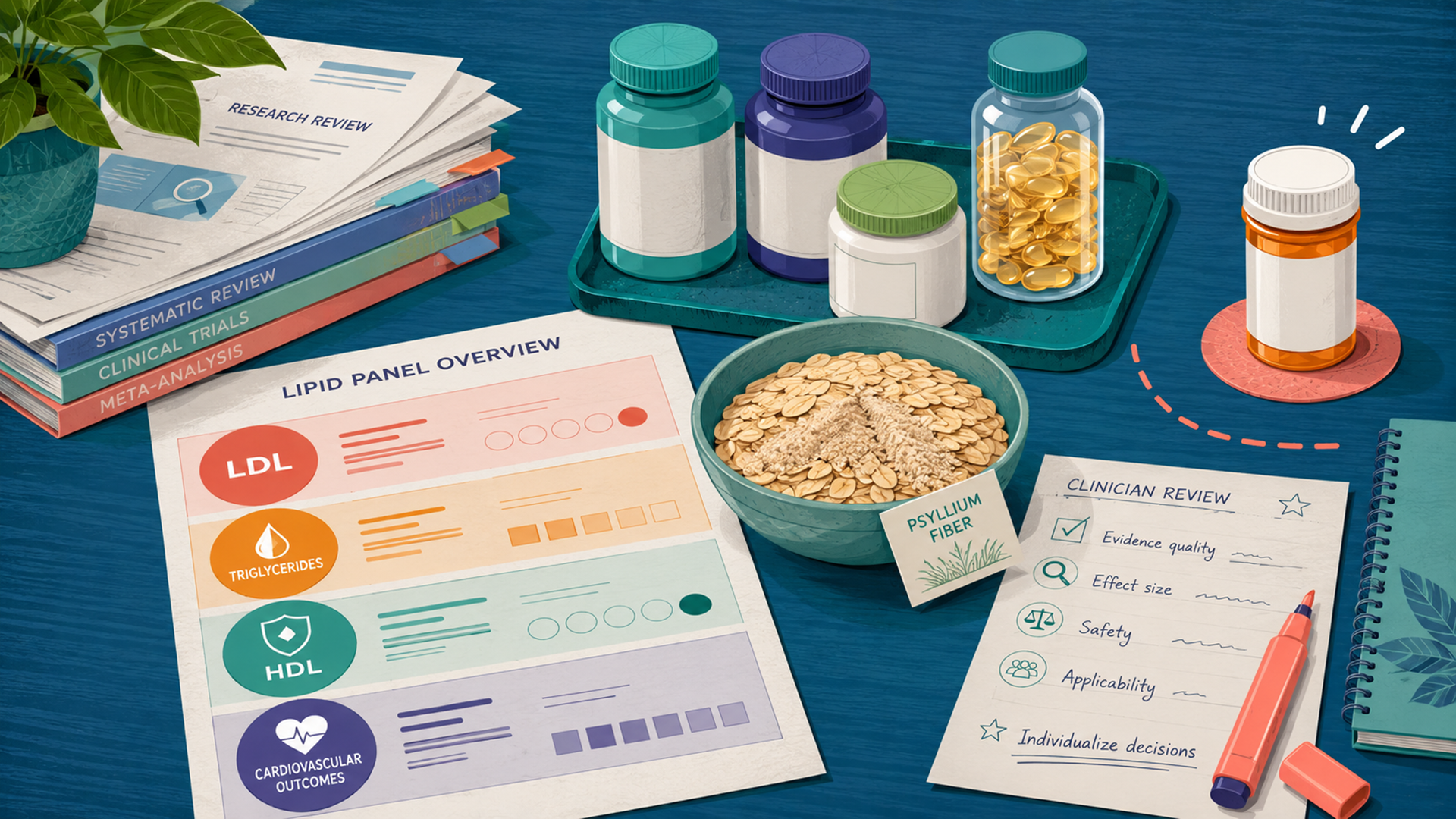
Quick answer: do supplements lower cholesterol or triglycerides?
Some supplements can modestly change LDL cholesterol, triglycerides, total cholesterol, or other laboratory measurements. The better-supported examples include soluble fiber, plant sterols or stanols, and high-dose omega-3 formulations for triglycerides. Red yeast rice can lower LDL when it contains enough monacolin K, but monacolin K is chemically identical to the prescription drug lovastatin, product amounts are unpredictable, and the same medication-like risks apply.
That does not mean dietary supplements are proven substitutes for cholesterol medicines or that a lower laboratory number automatically produces fewer heart attacks or strokes. The 2026 ACC/AHA multisociety dyslipidemia guideline states that dietary supplements are not recommended for lowering LDL cholesterol or triglycerides because the evidence is limited or inconsistent and cardiovascular-outcome benefits are limited or unproven.
This guide covers commonly studied and commonly asked-about products rather than every supplement ever marketed. It separates four different questions:
- Can the product lower LDL cholesterol?
- Can it lower triglycerides?
- Can it raise HDL cholesterol?
- Has it been shown to reduce heart attacks, strokes, or cardiovascular death?
The most important distinction
Changing a lipid measurement is not the same as improving cardiovascular outcomes. A product can lower triglycerides, raise HDL, or slightly lower LDL without proving that it prevents heart attacks or strokes.
Medical safety note
This article is educational only. It is not medical advice, diagnosis, treatment guidance, supplement dosing guidance, or a substitute for a qualified clinician. Do not stop, reduce, replace, or delay a prescribed statin, ezetimibe, PCSK9-targeting medicine, bempedoic acid, fibrate, prescription omega-3 product, or other treatment because of this article.
Review every supplement with a clinician or pharmacist if you have cardiovascular disease, diabetes, kidney or liver disease, thyroid disease, a history of pancreatitis, familial hypercholesterolemia, pregnancy, unexplained muscle symptoms, or multiple prescription medications.
Who this guide is for
This guide is for adults who have seen an abnormal lipid panel, people comparing over-the-counter products, caregivers, health-curious readers, students, and anyone trying to prepare for a more informed clinician conversation.
It is especially useful if a product claims to “support healthy cholesterol,” “raise good cholesterol,” “clean arteries,” “work like a statin,” “lower triglycerides naturally,” or replace prescription treatment. Those phrases often blur together different laboratory targets and rarely establish a proven reduction in cardiovascular events.
When to get medical care before trying a supplement
High cholesterol and triglycerides usually do not cause obvious symptoms. The absence of symptoms does not mean the result is harmless, and supplements should not delay clinical evaluation.
- Call emergency services for possible heart attack or stroke symptoms. These include chest pressure or pain, sudden shortness of breath, sudden weakness or numbness on one side, facial drooping, trouble speaking, or sudden loss of coordination.
- Seek urgent care for severe upper abdominal pain, repeated vomiting, fever, or pain spreading to the back, particularly if you have very high triglycerides or a history of pancreatitis.
- Arrange prompt clinician review when triglycerides are 500 mg/dL or higher. Risk becomes especially concerning at 1,000 mg/dL or higher, where pancreatitis-focused treatment may be needed.
- Discuss an LDL cholesterol result of 190 mg/dL or higher promptly. In adults, this can be a sign of familial hypercholesterolemia or another high-risk lipid disorder.
- Get clinical guidance before supplementing during pregnancy, breastfeeding, liver disease, kidney disease, or treatment with anticoagulants, antiplatelet medicines, diabetes medicines, or lipid-lowering drugs.
What high cholesterol and triglycerides actually mean
“High cholesterol” is not one measurement. A standard lipid panel contains several values that answer different questions.
LDL cholesterol
LDL-C estimates cholesterol carried in low-density lipoprotein particles. Long-term exposure to atherogenic particles contributes to plaque formation and cardiovascular risk.
Triglycerides
Triglycerides are circulating fats influenced by food intake, alcohol, insulin resistance, diabetes, genetics, medicines, and other conditions. Very high levels can raise pancreatitis risk.
HDL cholesterol
HDL-C is a useful risk marker, but simply raising the number with a supplement or drug does not guarantee fewer cardiovascular events.
Non-HDL, ApoB, and Lp(a)
Non-HDL cholesterol and ApoB can add information about atherogenic particles. Lipoprotein(a), or Lp(a), is a largely inherited risk marker that may not appear on a standard lipid panel.
The 2026 guideline recommends considering ApoB in selected situations, particularly when triglycerides are elevated, and measuring Lp(a) at least once to identify inherited risk that a standard lipid panel may miss.
How dyslipidemia is usually managed
Management depends on the exact lipid abnormality, overall atherosclerotic cardiovascular disease risk, age, family history, blood pressure, diabetes, kidney disease, smoking, prior cardiovascular events, pregnancy status, medication history, and possible inherited conditions.
A clinician may first look for secondary contributors such as uncontrolled diabetes, hypothyroidism, kidney or liver disease, alcohol intake, dietary patterns, weight change, and medicines that affect lipid levels. Treatment can include dietary changes, physical activity, smoking cessation, weight management when appropriate, and evidence-based medication.
For elevated LDL cholesterol and cardiovascular-risk reduction, statins remain foundational for many patients. Other options can include ezetimibe, PCSK9-targeting therapies, bempedoic acid, and condition-specific treatment. For persistent hypertriglyceridemia, statins remain the pharmacologic foundation for cardiovascular-risk reduction, while fibrates or prescription omega-3 medicines may be considered in selected situations.
How to read supplement evidence
A study can be statistically positive without showing a meaningful health benefit. Before interpreting any cholesterol-supplement claim, check the population, product, dose, comparison group, duration, endpoint, and source of funding.
A practical evidence hierarchy
- Cardiovascular-outcome trials: Do heart attacks, strokes, hospitalizations, or deaths change?
- Randomized lipid trials: Does LDL, triglyceride, non-HDL cholesterol, or ApoB change compared with placebo?
- Systematic reviews: Are results consistent across comparable trials?
- Observational studies: Are supplement users different in other ways that could explain the result?
- Lab or animal studies: Is there only a plausible mechanism, without proof in people?
Why product identity matters
“Fish oil,” “green tea extract,” “berberine,” “red yeast rice,” and “probiotic” do not describe one standardized exposure. Products may differ in active compound, purity, absorption, dose, contaminants, inactive ingredients, and whether the tested formulation is even available to consumers.
What the SPORT trial showed
In the 28-day SPORT trial, low-dose rosuvastatin lowered LDL cholesterol significantly more than placebo and six commonly used supplements: fish oil, cinnamon, garlic, turmeric, plant sterols, and red yeast rice. None of those supplements significantly lowered LDL compared with placebo in that particular trial. One short study cannot answer every formulation question, but it shows why over-the-counter products should not be assumed to perform like established lipid-lowering medicine.
Evidence snapshot table
This table summarizes commonly studied and commonly marketed products. It is not a dosing guide or a recommendation to take any product.
| Supplement or product | Primary target | Evidence on lipid measurements | Proven cardiovascular-outcome benefit? | Main safety or evidence limitation |
|---|---|---|---|---|
| Psyllium husk | LDL cholesterol | Soluble-fiber evidence is comparatively consistent for a modest LDL reduction. | No proven stand-alone supplement effect on cardiovascular events. | Can cause bloating or obstruction if taken without enough fluid; can affect medication absorption. |
| Oat or barley beta-glucan | LDL cholesterol | Consistent evidence supports modest LDL lowering as part of a dietary pattern. | No supplement-specific event benefit established. | Food products, purified powders, and capsules are not necessarily equivalent. |
| Plant sterols or stanols | LDL cholesterol | Can modestly lower cholesterol, particularly when used with meals. | Direct cardiovascular-event reduction from supplements has not been established. | Evidence is stronger for enriched foods than supplements; avoid in sitosterolemia. |
| Red yeast rice | LDL cholesterol | Can lower LDL when enough monacolin K is present. | Do not assume an OTC product has the outcome evidence of a regulated statin. | Monacolin K is lovastatin; amounts vary, statin-like adverse effects occur, and citrinin contamination is possible. |
| Berberine | LDL and triglycerides | Meta-analyses of generally small trials suggest modest lipid and glucose changes. | No established reduction in cardiovascular events. | Trial quality and formulations vary; GI effects and medication interactions matter. |
| Soy protein or isoflavones | LDL cholesterol | Small effects are possible; soy foods appear more useful than isolated isoflavone supplements. | No supplement-specific event benefit established. | Do not assume a capsule reproduces the effects of replacing other foods with soy foods. |
| Ground flaxseed or lignans | LDL cholesterol | Some studies suggest modest benefit; flaxseed oil has not shown the same effect. | No established cardiovascular-event reduction from flax supplements. | GI effects, swallowing concerns, and medication timing matter. |
| Garlic | Total and LDL cholesterol | Reviews suggest small or modest changes, with variable results. | No established event benefit. | Bleeding risk, odor, GI effects, and drug interactions. |
| Green tea or catechin extract | LDL cholesterol | Some analyses show a small LDL effect; triglyceride and HDL findings are inconsistent. | No established event benefit from extract supplements. | Concentrated extracts can injure the liver and interact with medicines. |
| Citrus bergamot | LDL and triglycerides | Small, heterogeneous studies suggest possible effects. | No established event benefit. | Low-certainty evidence, inconsistent formulations, and limited long-term safety data. |
| Artichoke leaf extract | LDL and triglycerides | Some pooled trials report modest lipid changes. | No established event benefit. | Small trials, variable extracts, allergy concerns, and possible gallbladder or bile-duct issues. |
| OTC fish, krill, or algae oil | Triglycerides | EPA and DHA can lower triglycerides, but effect depends on dose and product content. | Results cannot be generalized from prescription products to ordinary supplements. | Variable EPA/DHA content, oxidation, GI effects, bleeding concerns, and possible rhythm effects at high doses. |
| Prescription omega-3 medicines | Very high triglycerides; selected cardiovascular risk | Regulated formulations lower high triglycerides. | Selected icosapent ethyl use has an FDA-approved cardiovascular-risk indication. | These are medicines, not interchangeable with fish-oil supplements; bleeding and atrial-rhythm risks require review. |
| High-dose niacin | Triglycerides, LDL, and HDL | Prescription-strength nicotinic acid can lower triglycerides and LDL and raise HDL. | Adding it to statin therapy did not reduce events in AIM-HIGH despite improving lipid measurements. | Liver injury, severe flushing, glucose intolerance, gout, muscle symptoms, and rhythm or blood-pressure effects. |
| Probiotics or synbiotics | Mixed lipid markers | Some pooled analyses report small, strain-specific effects. | No established cardiovascular-event benefit. | Results cannot be generalized across strains, combinations, doses, or populations. |
| Fenugreek | Triglycerides and glucose-related risk | Some small metabolic studies report lipid changes, especially in diabetes populations. | No established event benefit. | GI effects, allergy, blood-sugar effects, and medication interactions. |
| Spirulina | LDL and triglycerides | Meta-analyses suggest possible modest changes, but studies are heterogeneous. | No established event benefit. | Product contamination and quality-control concerns; limited long-term evidence. |
| Pantethine | LDL and triglycerides | Older, generally small trials suggest lipid changes at high supplemental amounts. | No established event benefit. | Evidence is based on small studies; pantethine is not equivalent to ordinary pantothenic acid. |
| Cinnamon | Glucose and mixed lipid markers | Results are inconsistent; it did not lower LDL versus placebo in SPORT. | No established event benefit. | Cassia cinnamon can contain coumarin; liver and drug-interaction concerns apply. |
| Turmeric or curcumin | Inflammation and mixed lipid markers | Evidence is mixed and insufficient for treating dyslipidemia; no LDL benefit appeared in SPORT. | No established event benefit. | High-absorption extracts have been linked to liver injury; bleeding and gallbladder concerns. |
| Policosanol | LDL cholesterol | Results have been inconsistent, particularly across independent studies and product sources. | No established event benefit. | Product identity and evidence reproducibility are major limitations. |
| Guggul or gugulipid | LDL cholesterol | Clinical evidence is inconsistent and not reliable enough for lipid treatment. | No established event benefit. | Rash, GI effects, thyroid-related concerns, and multiple medication interactions. |
| Red clover | Mixed lipid markers | Studies have produced inconsistent results. | No established event benefit. | Hormone-related and bleeding concerns; avoid assuming menopausal studies apply broadly. |
| CoQ10 | Statin-symptom claims, not lipid lowering | Not an established cholesterol- or triglyceride-lowering supplement. | No lipid-related event benefit established. | The 2026 guideline does not recommend routine CoQ10 for statin-attributed muscle symptoms. |
| Vitamin D, vitamin E, vitamin C, selenium, chromium, or magnesium | General wellness or deficiency correction | Not established treatments for elevated LDL or triglycerides unless addressing a separate deficiency or indication. | No established lipid-treatment outcome benefit. | Megadoses can cause toxicity or interact with medication. |
| Apple cider vinegar, lecithin, amla, black seed, hibiscus, or tocotrienols | Mixed metabolic claims | Small or inconsistent studies do not establish reliable lipid treatment. | No established event benefit. | Product-specific evidence, dose, interactions, and long-term safety are uncertain. |
| Multi-ingredient “cholesterol support” blends | Mixed claims | Evidence for one ingredient cannot be transferred to an undisclosed or underdosed blend. | No established event benefit for the blend unless directly tested. | Duplicate ingredients, hidden drug-like compounds, contamination, and interaction uncertainty. |
Supplements studied primarily for LDL cholesterol
Psyllium and other soluble fibers
Soluble fibers can reduce absorption of bile acids and cholesterol in the digestive tract. Psyllium and beta-glucan from oats or barley have more consistent LDL-lowering evidence than most botanical supplements. The FDA recognizes blood-cholesterol lowering as a beneficial physiological effect of certain dietary fibers.
That does not make fiber a replacement for indicated medicine. Psyllium also needs adequate fluid and may need to be separated from certain medicines because it can affect absorption.
Plant sterols and stanols
Plant sterols and stanols resemble cholesterol and reduce intestinal cholesterol absorption. NCCIH reports that supplements taken with meals can reduce cholesterol, although evidence is more extensive for foods enriched with sterols or stanols.
A modest LDL change should not be confused with direct proof that the supplement prevents heart attacks. People with the rare disorder sitosterolemia should not use plant-sterol products without specialist guidance.
Red yeast rice
Red yeast rice is often marketed as a natural statin alternative. Some products contain monacolin K, which is chemically identical to lovastatin. Products with enough monacolin K can lower LDL, but the consumer often cannot know the amount from the label.
The same muscle, liver, pregnancy, and drug-interaction concerns associated with lovastatin can apply. Products may also contain citrinin, a contaminant that can damage the kidneys. In the United States, products with more than trace monacolin K are treated by FDA as unapproved drugs rather than lawful dietary supplements.
Berberine
Meta-analyses of small trials suggest that berberine may modestly improve LDL, triglycerides, glucose, and other metabolic measurements in selected populations. The studies vary substantially in population, formulation, dose, duration, and quality.
There is no established evidence that berberine prevents cardiovascular events. It can cause gastrointestinal effects and may interact with diabetes medicines, anticoagulants, immune-suppressing medicines, and drugs handled by common transport or metabolism pathways.
Soy and flaxseed
Soy foods can produce a small cholesterol benefit, particularly when they replace foods higher in saturated fat. NCCIH notes that soy foods appear more beneficial than isolated soy protein or isoflavone supplements.
Whole or ground flaxseed and flax lignans may improve cholesterol in some groups, while flaxseed oil has not shown the same effect. A food-based substitution and a concentrated capsule are not equivalent interventions.
Garlic and green tea extracts
Garlic supplements may slightly lower total or LDL cholesterol, but the effect is modest and inconsistent compared with established medicine. Garlic can also increase bleeding risk.
Green tea may have a small LDL effect in some analyses. Concentrated green tea extract is different from drinking tea and has been linked to liver injury, especially in high-dose or fasting contexts.
Bergamot and artichoke leaf
Small studies and meta-analyses suggest possible LDL and triglyceride changes from citrus bergamot or artichoke leaf extracts. The evidence is limited by small samples, short duration, heterogeneous preparations, and little long-term safety information.
These products have not established the cardiovascular-outcome evidence expected of lipid-lowering medicines.
Supplements and products studied primarily for triglycerides
OTC fish oil, krill oil, and algae oil
EPA and DHA can lower triglycerides, and the effect tends to be greater at higher intakes and higher starting triglyceride levels. Ordinary supplements differ widely in EPA/DHA content, purity, oxidation, serving size, and whether they contain EPA, DHA, or both.
Do not assume that an OTC fish-oil, krill-oil, or algae-oil product reproduces the evidence for a regulated prescription formulation. High-dose use may also affect bleeding and heart rhythm in susceptible patients.
Prescription omega-3 medicines
Prescription omega-3 products are medicines with standardized ingredients and labeled indications. FDA-approved products can lower very high triglycerides. Icosapent ethyl also has a cardiovascular-risk-reduction indication for selected adults when used with statin therapy.
Those findings cannot be transferred to a generic fish-oil supplement. Prescription EPA-only and EPA-plus-DHA products are also not clinically interchangeable in every setting.
Niacin
Very high doses of nicotinic acid can lower triglycerides and LDL while raising HDL. These are medication-level doses rather than ordinary nutritional replacement.
In AIM-HIGH, extended-release niacin improved lipid measurements but did not reduce cardiovascular complications when added to effective statin treatment. High-dose niacin can cause liver injury, severe flushing, glucose intolerance, gout, muscle symptoms, blood-pressure changes, and rhythm problems. It should not be self-prescribed from a supplement shelf.
Fenugreek and spirulina
Fenugreek and spirulina have produced favorable lipid changes in some small or pooled studies, often in people with diabetes, metabolic syndrome, or other specific conditions. Results are not consistent enough to establish them as reliable triglyceride treatment.
Fenugreek may affect blood sugar and clotting. Spirulina and other algae products require careful quality control because contamination can differ by source and manufacturing process.
Severe triglycerides are not a supplement experiment
When triglycerides are very high, the immediate issue may be pancreatitis prevention rather than long-term supplement comparison. A clinician should evaluate secondary causes, current medicines, alcohol intake, glucose control, and whether prescription treatment is needed.
Supplements with mixed, indirect, or insufficient evidence
Probiotics and synbiotics
Some meta-analyses report small changes in LDL, triglycerides, glucose, or inflammation. A result for one strain or combination does not establish that every probiotic works. CFU count alone does not prove lipid efficacy.
Pantethine
Pantethine is a derivative related to pantothenic acid. NIH notes that several small trials have reported lipid reductions at high supplemental amounts, but ordinary pantothenic acid does not appear to have the same effect. Cardiovascular-outcome evidence is absent.
Cinnamon and curcumin
Some metabolic studies report lipid changes, but findings vary by population, formulation, and duration. Neither cinnamon nor turmeric lowered LDL compared with placebo in SPORT. Concentrated cinnamon or curcumin products can also create liver, bleeding, gallbladder, or medication-interaction concerns.
Policosanol, guggul, and red clover
These products have produced conflicting clinical results. Evidence has not been reliable or reproducible enough to support their use as lipid-lowering treatments. Product-source differences, hormone-related effects, thyroid-related effects, rash, bleeding, and drug interactions can matter.
CoQ10
CoQ10 is usually marketed for statin-associated muscle symptoms rather than LDL or triglyceride lowering. The 2026 guideline does not recommend routine CoQ10 for preventing or treating statin-attributed muscle symptoms because consistent benefit has not been demonstrated.
Vitamins, minerals, and antioxidant blends
Vitamin D, vitamin C, vitamin E, selenium, chromium, magnesium, and multivitamins are not established treatments for elevated LDL or triglycerides. Correcting a documented deficiency is a separate medical question. High doses can cause toxicity or interfere with medication.
Other botanicals and proprietary blends
Apple cider vinegar, lecithin, amla, black seed, hibiscus, tocotrienols, grape-seed extracts, and multi-herb “cholesterol support” products have limited or inconsistent evidence. A blend should be judged as its own product; evidence for one ingredient cannot be transferred to an untested mixture.
Safety, interactions, and who should be careful
Supplement risk depends on the product, amount, formulation, medical history, and medications already being taken. The following situations deserve particular caution.
- Statins or other lipid-lowering medicine: Red yeast rice can duplicate statin exposure. Niacin and interacting botanicals can increase liver or muscle concerns.
- Anticoagulants or antiplatelet medicines: Garlic, high-dose omega-3s, turmeric, ginkgo-containing blends, and other products may increase bleeding concerns.
- Diabetes medicine: Berberine, fenugreek, cinnamon, and other metabolic supplements can alter glucose and complicate medication adjustment.
- Liver disease or abnormal liver tests: Niacin, red yeast rice, concentrated green tea extract, high-absorption curcumin, and multi-herb products may be inappropriate.
- Kidney disease: Contaminants, mineral accumulation, dehydration, and altered drug clearance can increase risk.
- Pregnancy or breastfeeding: Drug-like supplements and concentrated botanicals should not be assumed safe.
- Upcoming surgery or procedure: Bleeding effects and anesthesia interactions should be reviewed in advance.
- Multiple medicines: Older adults and people with complex medication lists have a higher likelihood of clinically important interactions.
Red yeast rice deserves medication-level caution
A product that contains a statin-like compound should not be treated as a harmless food supplement. Combining it with a statin, using it after a previous severe statin reaction, or taking it during pregnancy requires direct clinician review.
What the research does not prove
- A reduction in total cholesterol does not automatically mean LDL particle-related risk improved enough to matter clinically.
- Raising HDL does not prove that heart attacks or strokes will fall.
- Lowering triglycerides does not automatically prove reduced cardiovascular risk or pancreatitis risk.
- A trial of a prescription omega-3 medicine does not validate an OTC fish-oil supplement.
- A red yeast rice study does not prove that every retail product contains the same monacolin amount or purity.
- A study of soy foods does not prove an isolated isoflavone capsule has the same effect.
- A positive result in people with diabetes or fatty liver may not apply to everyone with high cholesterol.
- A four- or twelve-week lipid change does not establish long-term safety or cardiovascular benefit.
- A “natural” label does not prove accurate dosing, purity, absence of drug interactions, or legal regulatory status.
How to talk to a clinician about supplements
Bring the complete Supplement Facts label, brand, serving size, lot number, reason for use, and a list of every prescription and nonprescription product you take.
Questions to ask
- Which measurement is the real priority: LDL-C, non-HDL-C, ApoB, triglycerides, Lp(a), or overall cardiovascular risk?
- Could an underlying condition or medication be causing my lipid result?
- Is my LDL or triglyceride level high enough that delaying established treatment would be risky?
- Does this product have evidence for my exact lipid abnormality?
- Was the tested product the same form, formulation, and amount as the one I am considering?
- Could it interact with my statin, anticoagulant, diabetes medicine, blood-pressure medicine, or other prescriptions?
- Could it affect my liver, kidneys, muscles, blood sugar, bleeding risk, or heart rhythm?
- What laboratory monitoring would be needed?
- Would a food-based change be safer or better supported than a concentrated supplement?
- What evidence-based medication alternatives exist if I have side effects or concerns about my current treatment?
How to choose supplements more safely
FDA does not approve dietary supplements for safety and effectiveness before they are marketed. Product selection therefore matters, although no quality seal can prove that a supplement lowers cardiovascular risk.
- Define the target first. A product marketed for “heart health” may have no relevant LDL or triglyceride evidence.
- Prefer single-ingredient products. They are easier to evaluate for dose, side effects, and interactions.
- Check the exact chemical form. Nicotinic acid is not the same as every product labeled niacin; EPA-only prescription medicine is not generic fish oil.
- Avoid proprietary blends. They may hide individual amounts or combine several interacting ingredients.
- Look for independent quality testing. USP, NSF, or another credible program may help verify identity and contamination, but it does not prove effectiveness.
- Keep a copy of the label and lot number. Formulations can change even when the front label looks similar.
- Use a clinician-agreed monitoring plan. Without repeat laboratory testing and safety review, there is no reliable way to know whether a product is helping or causing harm.
- Do not replace prescribed treatment without a clinician conversation. Supplements have not earned equivalent outcome evidence merely because they are sold for the same laboratory target.
Read the evidence before buying the label
Use Jivaro’s research-literacy resources to separate laboratory changes, clinical outcomes, product marketing, and safety evidence.
Common mistakes to avoid
Chasing total cholesterol alone
Total cholesterol can hide important differences in LDL, triglycerides, HDL, non-HDL cholesterol, ApoB, and Lp(a).
Treating HDL as a goal by itself
Raising HDL with niacin improved the number in AIM-HIGH but did not reduce cardiovascular complications.
Assuming fish oil equals prescription omega-3
OTC products and regulated prescription formulations differ in content, purity, dosing, indications, and outcome evidence.
Calling red yeast rice drug-free
Its active monacolin can be chemically identical to lovastatin and can produce statin-like adverse effects.
Using “natural” as a safety test
Natural products can affect liver enzymes, glucose, clotting, heart rhythm, drug metabolism, and pregnancy safety.
Ignoring baseline risk
The same LDL result can mean something different in someone with prior heart disease, diabetes, kidney disease, or familial hypercholesterolemia.
Trusting one short study
A brief lipid change does not establish long-term safety or cardiovascular benefit.
Stacking several products
Combining red yeast rice, niacin, berberine, fish oil, garlic, and herbal blends can multiply interaction and monitoring problems.
Stopping prescribed medicine
A supplement should not replace evidence-based treatment without a clinician-guided plan.
FAQ: supplements for cholesterol and triglycerides
What supplement has the best evidence for lowering LDL?
Soluble fibers such as psyllium and beta-glucan, plus plant sterols or stanols, have comparatively consistent evidence for modest LDL changes. They are adjuncts, not proven substitutes for indicated medicine.
What supplement lowers triglycerides?
EPA and DHA can lower triglycerides, but effect depends on formulation and amount. Prescription omega-3 medicines are regulated products and should not be treated as interchangeable with ordinary fish-oil supplements.
Is red yeast rice safer than a statin?
Not necessarily. Monacolin K is chemically identical to lovastatin, product amounts are unpredictable, and statin-like muscle, liver, pregnancy, and interaction risks can apply.
Should I take niacin to raise HDL?
Do not self-treat low HDL with high-dose niacin. Although niacin can raise HDL, AIM-HIGH found no added cardiovascular benefit when it was added to effective statin treatment, and high doses can cause serious adverse effects.
Can supplements replace cholesterol medicine?
Current ACC/AHA guidance does not recommend dietary supplements for lowering LDL or triglycerides because evidence is limited or inconsistent and cardiovascular-outcome benefits are not established.
Do third-party testing seals prove a supplement works?
No. Independent testing may help confirm identity, purity, or contamination standards, but it does not prove that a supplement lowers LDL, triglycerides, or cardiovascular risk.
Sources and evidence method
This guide prioritized current clinical guidelines, federal health agencies, regulated drug information, randomized trials, and systematic reviews. Changes in lipid measurements were kept separate from cardiovascular-outcome evidence.
- American Heart Association: 2026 Guideline on the Management of Dyslipidemia
- AHA: Top Things to Know About the 2026 Dyslipidemia Guideline
- NCCIH: High Cholesterol and Natural Products—What the Science Says
- NCCIH: Red Yeast Rice
- NIH Office of Dietary Supplements: Omega-3 Fatty Acids
- NIH Office of Dietary Supplements: Niacin
- NIH Office of Dietary Supplements: Pantothenic Acid and Pantethine
- FDA: Cholesterol Medicines Guide
- FDA: Questions and Answers on Dietary Fiber
- FDA: Questions and Answers on Dietary Supplements
- NIH ODS: What You Need to Know About Dietary Supplements
- NHLBI: AIM-HIGH Study Questions and Answers
- American College of Cardiology: SPORT Trial
- CDC: Familial Hypercholesterolemia
- PubMed: Systematic Review and Meta-Analysis of Berberine and Lipids
- PubMed: Artichoke Supplementation and Lipid Profile Meta-Analysis
Evidence labels were intentionally conservative. A product was not described as clinically effective merely because one trial, biomarker, or meta-analysis reported a statistically significant change. Safety evidence was included even when benefit evidence was weak.